If you’ve ever wondered whether lovey or lovie is the correct spelling, you’re not alone. Many people encounter both versions online and become confused because they share the same pronunciation, sound, and overall meaning. This common confusion often leads to questions about the difference between the two terms, their usage, and whether one spelling is more correct than the other.
The truth is that lovey or lovie can both function as an affectionate nickname, term of endearment, or expression of love for a loved one. However, their usage pattern, context, and online appearance can vary. One spelling may be more common in certain situations, while the other is often seen in parenting blogs, baby products, online listings, and everyday communication.
This guide provides a clear explanation of lovey or lovie, including their origin, meanings, correct usage, common mistakes, real-life examples, and the reasons these spellings continue to appear in searches, digital content, and modern English writing. By understanding the contextual meaning and usage differences, you’ll know exactly which form works best in different situations.
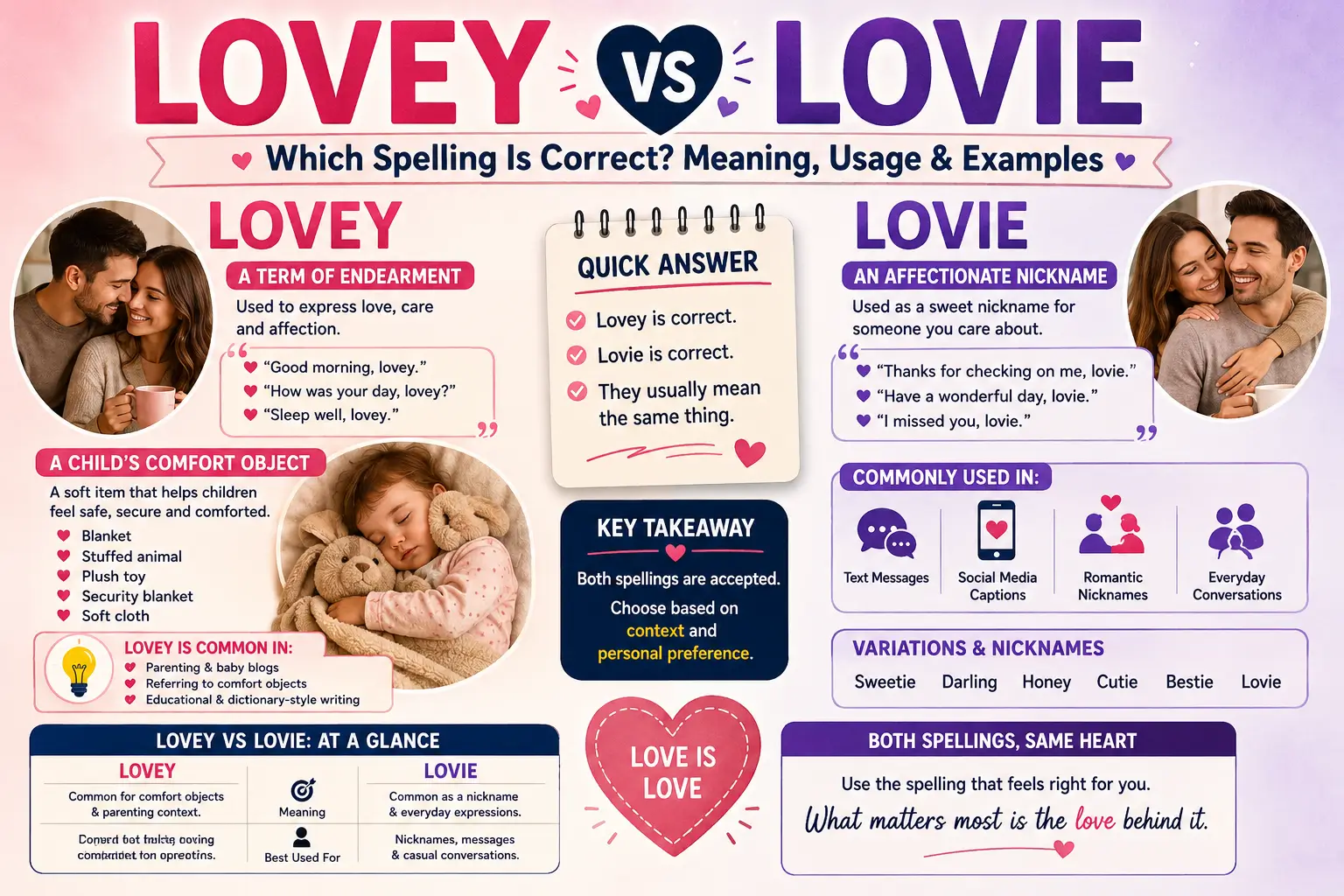
Lovey or Lovie: Quick Answer
Here’s the quick answer for anyone in a hurry.
| Question | Answer |
| Is lovey correct? | Yes |
| Is lovie correct? | Yes |
| Do they mean the same thing? | Usually yes |
| Which spelling is more common? | Lovey is slightly more common overall |
| Which spelling is common as a nickname? | Lovie |
| Which spelling is common for a child’s comfort item? | Lovey |
Bottom line: Both spellings are accepted. The best choice depends on context and personal preference.
What Does Lovey Mean?
The word lovey is an affectionate term used to express fondness, warmth, and emotional closeness.
People commonly use it in the same way they use words such as:
- Sweetheart
- Darling
- Honey
- Dear
- Babe
When someone calls another person “lovey,” they are usually expressing affection rather than describing a specific characteristic.
Lovey as a Term of Endearment
A term of endearment is a nickname used to show love, care, or emotional connection.
For example:
“Good morning, lovey.”
“How was your day, lovey?”
“Sleep well, lovey.”
These expressions create a warm and friendly tone that feels personal and genuine.
Lovey as a Child’s Comfort Object
Interestingly, lovey has another widely recognized meaning.
In parenting, a lovey is a soft comfort item that helps a child feel safe and secure. It may be:
- A small blanket
- A stuffed animal
- A plush toy
- A soft cloth
- A security blanket
Many toddlers become attached to a lovey because it provides familiarity during naps, bedtime, travel, or stressful situations.
Why Children Become Attached to a Lovey
Child development experts often describe comfort objects as transitional items.
These objects can help children:
- Feel safe in unfamiliar environments
- Develop independence
- Reduce separation anxiety
- Establish bedtime routines
- Manage emotional stress
For many children, a lovey becomes an important source of comfort during early childhood.
What Does Lovie Mean?
The spelling lovie carries nearly the same meaning as lovey.
Most often, people use it as a nickname for someone they care about.
The word creates a sense of warmth, affection, and familiarity. Because the “-ie” ending sounds playful and friendly, many people naturally gravitate toward this spelling in personal conversations.
Lovie as an Affectionate Nickname
Many English nicknames use the “-ie” ending.
Examples include:
- Sweetie
- Dearie
- Bestie
- Cutie
- Lovie
Because of this pattern, “lovie” feels natural in informal communication.
Examples include:
“Thanks for checking on me, lovie.”
“Have a wonderful day, lovie.”
“I missed you, lovie.”
Is Lovie a Real Word?
Yes. Lovie is a legitimate English word and appears in major dictionaries.
Although some writers prefer the spelling “lovey,” the version “lovie” is widely accepted and understood by native English speakers.
Lovey vs Lovie: What’s the Difference?
The biggest surprise for most people is that there isn’t much difference at all.
Both spellings generally communicate the same idea. The distinction comes down to usage patterns rather than meaning.
Meaning Comparison
| Feature | Lovey | Lovie |
| Affectionate nickname | Yes | Yes |
| Romantic use | Yes | Yes |
| Family use | Yes | Yes |
| Friendly use | Yes | Yes |
| Child comfort object | Very common | Less common |
In everyday communication, most people will understand either spelling immediately.
Usage Comparison
While both spellings are correct, certain contexts tend to favor one version over the other.
Lovey is more common when:
- Discussing parenting
- Referring to a comfort object
- Writing educational content
- Following dictionary-style spelling
Lovie is more common when:
- Sending text messages
- Writing social media captions
- Using romantic nicknames
- Speaking casually with friends and family
Which Spelling Should You Choose?
If you’re referring to a child’s comfort blanket or stuffed toy, choose lovey.
If you’re writing a sweet message to a loved one, lovie often feels more natural.
When in doubt, either spelling is acceptable because both are widely recognized.
Final Verdict: Lovey or Lovie?
When it comes to lovey or lovie, there isn’t a single right or wrong answer. Both spellings are widely recognized in English and share the same core meaning as an affectionate nickname, term of endearment, or expression of love. The main difference lies in usage, personal preference, and the specific context in which the word appears. While lovey is often seen in parenting discussions, baby products, and references to a child’s comfort item, lovie is commonly used in everyday communication between friends, family members, and romantic partners.
Understanding the origin, pronunciation, and usage differences helps remove the confusion that many people experience when they encounter both spellings online. In most situations, readers will understand your intended meaning regardless of which form you choose. What matters most is using the spelling that best fits your audience and purpose.
Whether you’re writing a message to a loved one, reading parenting blogs, exploring online content, or simply checking the correct usage of a word, knowing the distinction between lovey and lovie can improve your confidence in writing. By focusing on the contextual meaning, recognizing common word variations, and understanding modern language usage, you can use either spelling naturally and accurately. The next time you see lovey or lovie in searches, social conversations, or digital media, you’ll know exactly why both forms continue to remain popular.









1 thought on “Lovey or Lovie: Which Spelling Is Correct? Meaning, Usage, and Examples”