Lended vs. Lent: Which Is Correct? Meaning, Grammar, and Examples

Why the Correct Form Matters Lended vs. Lent has a simple rule: use lent as the past tense and past ...
Read more
Could vs. Would: Meanings, Differences, Rules, and Examples

What Are Modal Verbs in English Grammar? Could vs. Would explains how two modal verbs show ability, possibility, willingness, and ...
Read more
Vice Versa or Visa Versa: Correct Spelling, Meaning, Pronunciation, and Usage

If you’ve ever stopped while writing and wondered whether the correct phrase is vice versa or visa versa, you’re not ...
Read more
Guarantee vs. Warranty: Meanings, Differences, Rules, and Examples

Guarantee Vs Warranty helps every buyer and consumer compare products with confidence by checking warranty, guarantee, and important terms before ...
Read more
Nosy vs. Nosey: Which Spelling Is Correct?

Nosy vs Nosey often confuses English learners and native speakers because both words sound the same and have the same ...
Read more
Pick-Up vs Pickup vs Pick Up: Meaning, Grammar, and Correct Usage

Pick Up vs Pickup is easier to understand when you know the grammar rules and the difference between pick up, ...
Read more
Sweet vs Sweat: Meaning, Pronunciation, Grammar, and Examples

Sweet vs Sweat is easy to understand when you focus on meaning first, not just spelling. Many learners confuse these ...
Read more
Tweek vs Tweak: Correct Spelling, Meaning, Grammar, and Examples

Tweek vs Tweak becomes simple once you learn the correct spelling, meaning, and grammar, helping you avoid common writing mistakes ...
Read more
Addition vs Edition: Meaning, Grammar, Pronunciation, and Examples
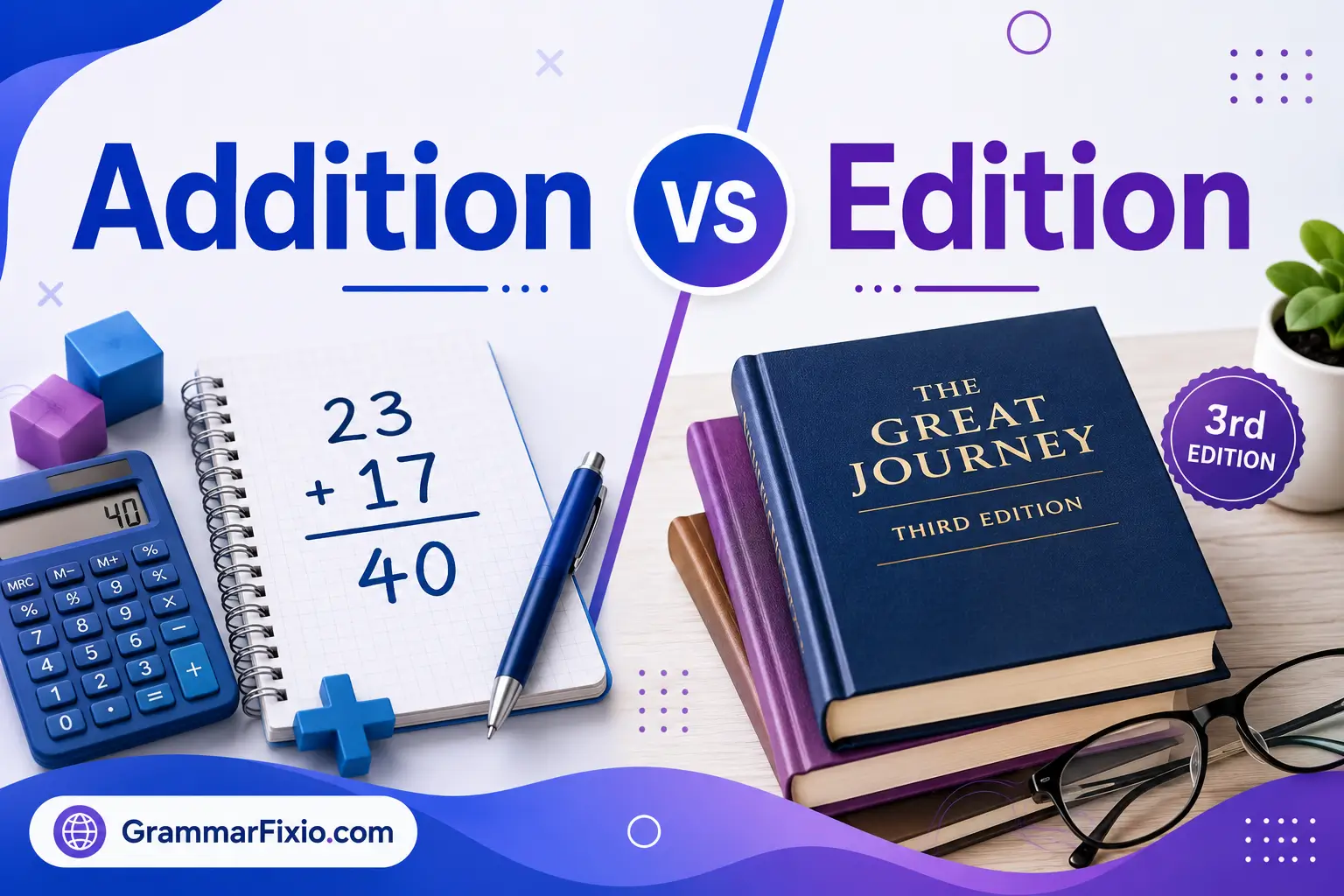
If Addition vs Edition has ever confused you, this guide will clarify the difference in simple English with clear examples ...
Read more
Hear vs Here: Meaning, Grammar, Pronunciation, and Correct Usage

Hear vs Here is a common English confusion because both words sound the same but have different meanings and uses ...
Read more