Whose vs Who’s: The Simple Difference, Grammar Rules, and Correct Examples

Whose vs Who’s: The Simple Difference, Grammar Rules, and Correct Examples
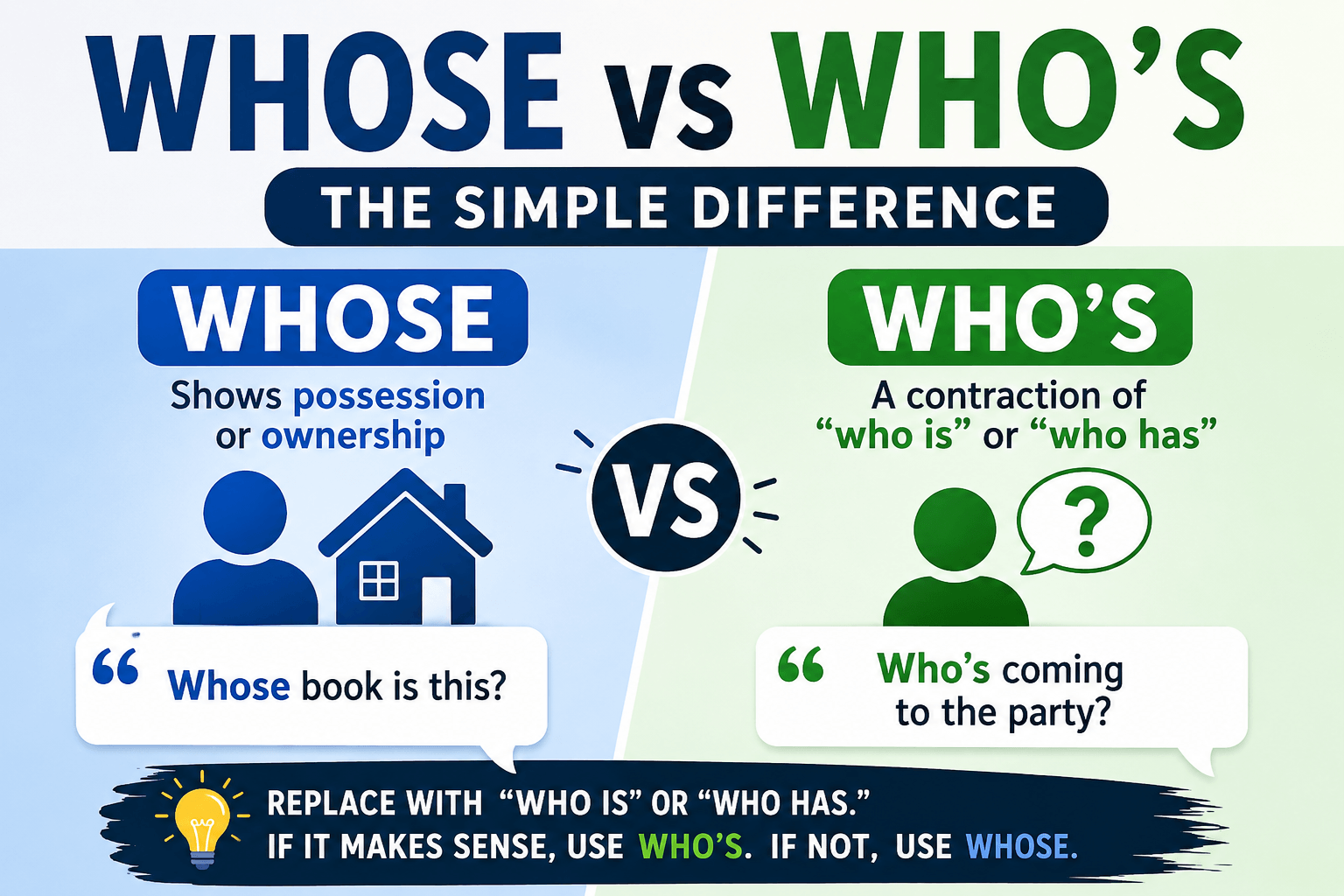
A Practical Way to Tell Them Apart Whose vs Who’s becomes easy once you know that whose shows possession, while who’s always means who is or who has in everyday writing today. The apostrophe causes most mistakes. Possessive pronouns such as his, hers, theirs, its, and whose never take apostrophes. By contrast, who’s is a … Read more

Canon vs Cannon: Meaning, Differences, Examples, and Correct Usage

Canon vs Cannon: Meaning, Differences, Examples, and Correct Usage

Why These Two Words Look Alike but Mean Different Things The canon vs cannon difference is simple: canon means an accepted rule or official story, while cannon means a large weapon that fires projectiles. These homophones share one pronunciation, but their spelling differs: single n for accepted material and extra n for artillery. In editing, … Read more

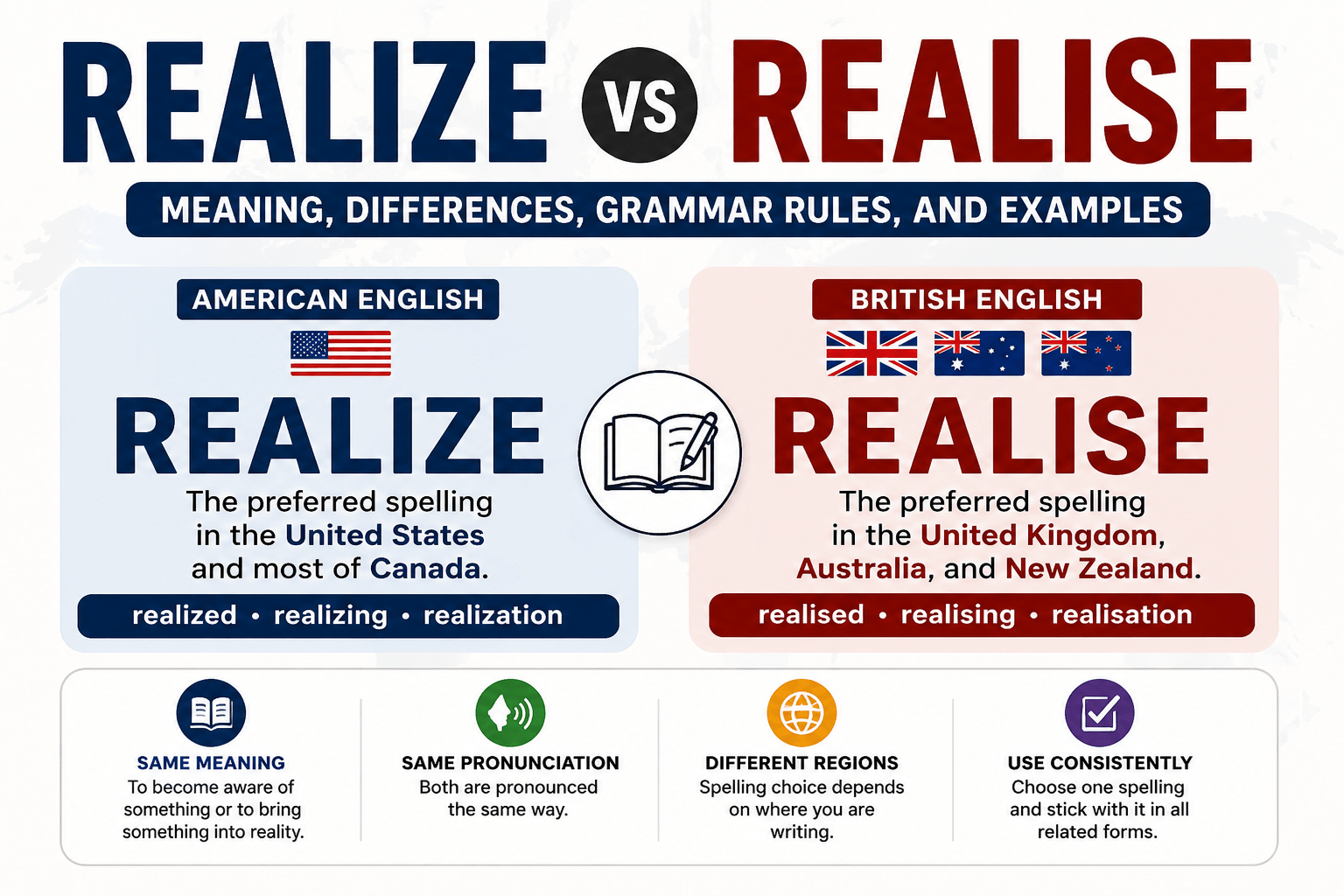
Realize vs Realise: Meaning, Differences, Grammar Rules, and Examples

Realize vs Realise: Meaning, Differences, Grammar Rules, and Examples

Realize vs Realise differs by one letter, but both forms have the same meaning, pronunciation, and grammar in standard written English today. Use realize for American English and most Canadian English. Use realise for common British and Australian writing. The -ize form is not simply American. It has a long history in British English, and … Read more

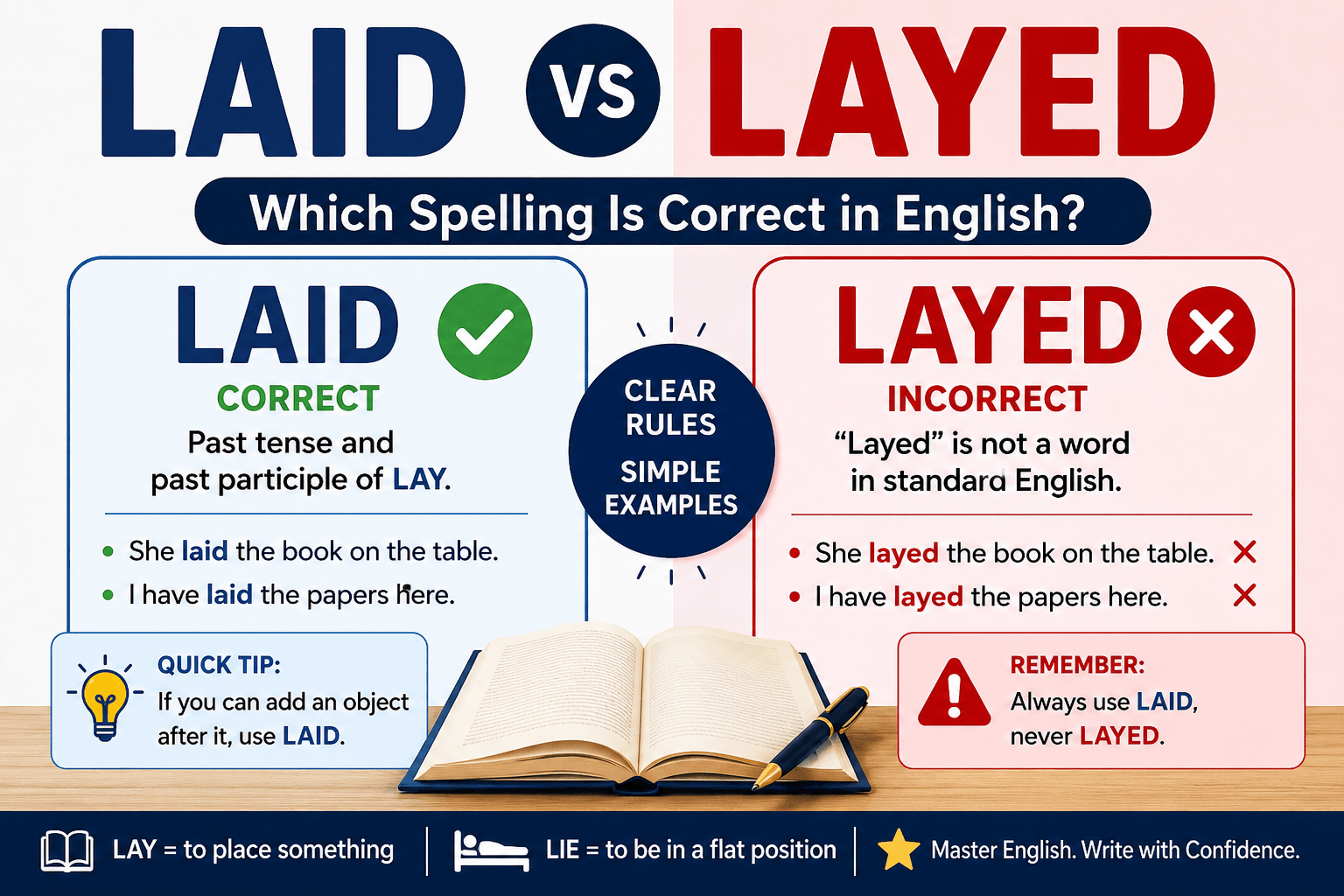
Laid vs Layed: Which Spelling Is Correct in English?

Laid vs Layed spelling and grammar comparison

How Lay and Lie Work in Real English Laid vs Layed becomes clearer when you separate spelling from grammar: laid is correct, while layed is a common error in standard English today. Use laid as the past tense and past participle of lay, which means to place something down. The deeper problem involves lay and … Read more

Segway or Segue: Meaning, Difference, Examples, and Easy Usage Guide

Segway or segue meaning and difference with examples

Some word mistakes are harmless. Others make your sentence do a backflip. Segway and segue fall into that second group. They sound exactly the same, so the confusion makes sense. If you hear someone say “let’s seg-way into the next topic,” your brain may picture the scooter brand before the spelling segue ever shows up. … Read more