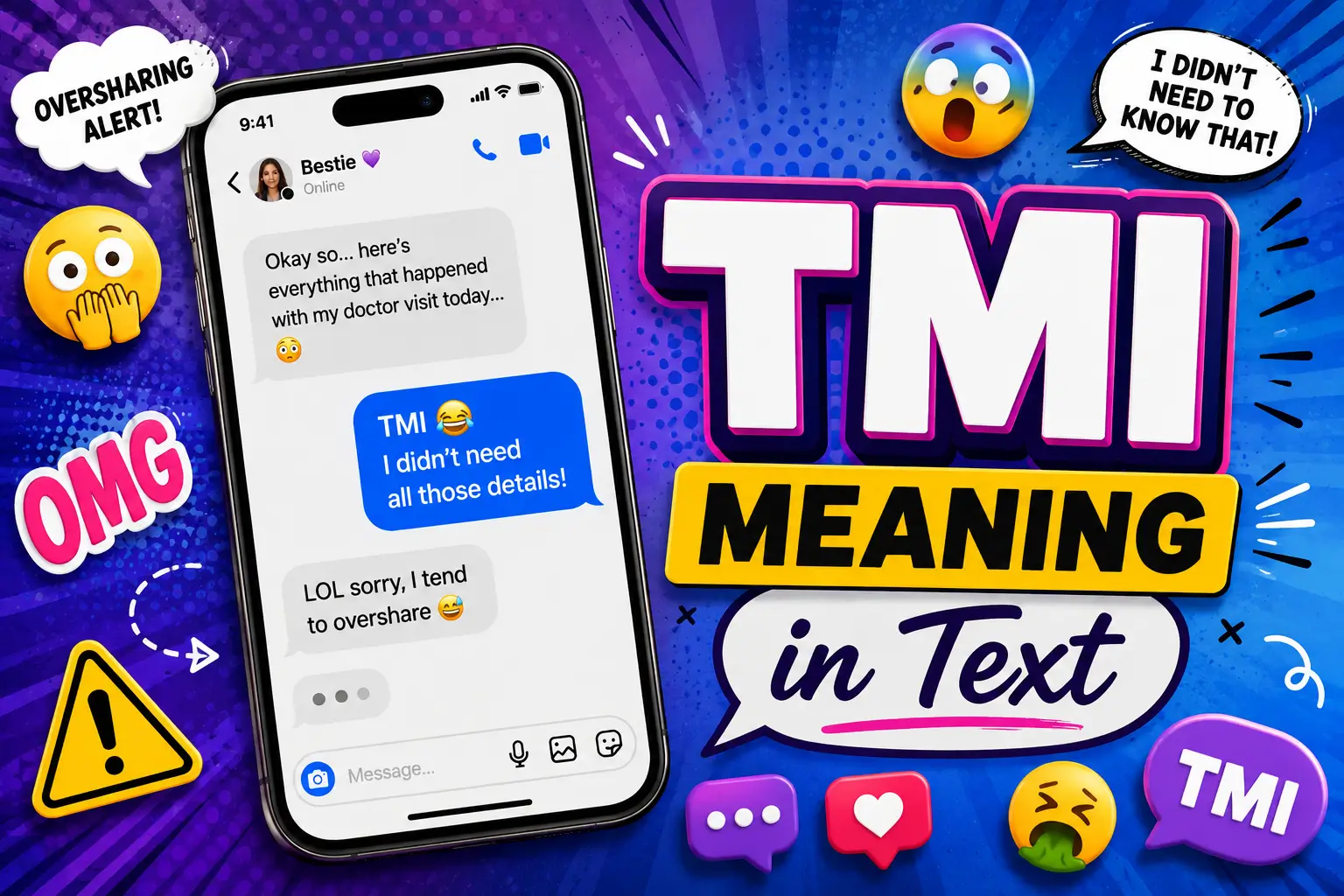
TMI Meaning in Text usually means “too much information.” This texting abbreviation is used when someone shares a detail that feels too personal, unnecessary, or more than you expected to hear. For example, “TMI 😂” can mean “I didn’t need to know that,” often in a playful way.
However, the meaning of TMI can change depending on the context, tone, and type of conversation. You may see it in text messages, Snapchat, Instagram, TikTok, DMs, or group chats when people react to oversharing.
In most cases, TMI is a casual way to respond to extra details. This guide will help you understand its meaning, common uses, real chat examples, replies, and other possible meanings.
Quick Answer: What Does TMI Mean?
TMI means “too much information” in texting and online conversations. People use it when someone shares a detail that is too personal, surprising, or unnecessary. It can be used seriously or as a joke depending on the conversation, tone, and relationship between the people chatting.
Quick Facts About TMI
| Detail | Answer |
| Abbreviation | TMI |
| Common Meaning | Too much information |
| Used In | Texts, DMs, social media, chats |
| Tone | Funny, surprised, uncomfortable, or playful |
| Best For | Reacting to oversharing |
| Example | “TMI, I didn’t need to know that 😂” |
| Can It Have Other Meanings? | Yes, depending on context |
What Does TMI Mean in Text?
In texting, TMI stands for “too much information.” It is used when someone shares a detail that feels too private, awkward, or unnecessary.
For example:
“My doctor said I need to change my diet because of my stomach problems.”
A friend might reply:
“TMI 😂”
This does not always mean the person is angry. Often, it is a playful way to say, “I did not need that much detail.”
However, TMI can also be used seriously. If someone shares a very personal story without warning, TMI may show discomfort.
The meaning depends on the situation, the relationship, and the tone of the message.
How People Use TMI in Conversations
Text messages
People use TMI when a friend shares an overly personal detail.
Example:
“TMI, but I haven’t slept in three days.”
Snapchat
On Snapchat, TMI may appear in chats or replies to funny or surprising snaps.
Example:
“TMI, why did you send me that 😂”
Users may use TMI in comments, stories, or DMs.
Example:
“TMI, but I did not need to know that.”
TikTok comments
People often use TMI when reacting to personal stories or videos.
Example:
“TMI 😭 but thanks for sharing.”
Group chats
Friends use TMI when someone overshares.
Example:
“TMI, we were just talking about dinner.”
Dating chats
Someone may use TMI when a person shares too much too soon.
Example:
“TMI lol, we just met.”
Friendly conversations
Friends often use TMI as a joke.
Example:
“TMI, but my dog ate my homework.”
Examples of TMI in Text Messages
Example 1:
Person A: I slept for only two hours because my neighbors were loud.
Person B: TMI 😂
Here, TMI means the person shared more detail than needed.
Example 2:
Person A: I’m going to the bathroom and then I’ll call you.
Person B: TMI.
The reply shows the detail was unnecessary.
Example 3:
Person A: I just told my entire family about our argument.
Person B: TMI, but okay.
TMI shows surprise about the personal information.
Example 4:
Person A: I spent three hours choosing what socks to wear.
Person B: TMI 😂
Here, it is used as playful teasing.
Example 5:
Person A: My stomach hurts because I ate too much spicy food.
Person B: TMI, but I hope you feel better.
The person acknowledges the oversharing but stays kind.
Example 6:
Person A: I checked my old messages from five years ago.
Person B: TMI, that’s embarrassing.
TMI shows the information feels too personal.
Example 7:
Person A: My cat woke me up by licking my face.
Person B: TMI 😂
This is a funny use of the abbreviation.
Example 8:
Person A: I don’t want to share details about my breakup.
Person B: Fair, no TMI needed.
Here, TMI refers to unnecessary personal details.
Example 9:
Person A: I have a weird habit that nobody knows about.
Person B: TMI already 😂
The reply is playful.
Example 10:
Person A: Let me explain every detail of what happened.
Person B: TMI, just give me the short version.
Here, TMI means the explanation is too long.
How to Reply to TMI
Your reply depends on whether the person is joking or serious.
Friendly reply:
“😂 Sorry, I shared too much.”
Casual reply:
“Fair enough, I’ll stop there.”
Flirty reply:
“Too much? I thought you wanted to know 😉”
Confused reply:
“Wait, was that too much information?”
Polite reply:
“Sorry, I didn’t mean to overshare.”
Funny reply:
“Warning: more TMI coming soon 😂”
Other Possible Meanings of TMI
Although TMI usually means “too much information” in texting, it can have other meanings in different situations.
| Meaning | Where It Is Used | Example | How to Understand It |
| Too Much Information | Texting and social media | “TMI 😂” | Someone shared too much |
| Three Mile Island | History and nuclear topics | “The TMI accident” | The topic involves the nuclear plant |
| Total Media Integration | Technology or business | “TMI systems” | The topic involves media systems |
Always check the topic before deciding what TMI means.
TMI Meaning on Snapchat, Instagram, and TikTok
On Snapchat, Instagram, and TikTok, TMI usually means “too much information.”
The meaning stays mostly the same across platforms. However, the tone can change.
For example:
- “TMI 😂” may be a joke.
- “TMI, please stop” sounds more serious.
- “That’s TMI but funny” sounds playful.
Because of this, you should consider the person, message, and situation.
Emotional or Practical Meaning of TMI
TMI can express different reactions depending on the conversation.
It can show:
- Surprise
- Humor
- Discomfort
- Teasing
- Mild embarrassment
Examples:
- “TMI 😂” sounds playful.
- “That’s TMI” sounds uncomfortable.
- “No TMI needed” sounds like a request for fewer details.
The abbreviation itself does not create the emotion. The surrounding words decide the tone.
How TMI Is Used in Daily Life
People use TMI when someone shares more information than expected. It is common in casual conversations, especially between friends who joke with each other.
For example, a person may say TMI after hearing a strange, personal, or overly detailed story.
Is TMI Formal or Informal?
TMI is informal.
It works well in:
- Texts with friends
- Social media comments
- Group chats
- Casual conversations
Avoid using it in:
- Work emails
- School assignments
- Professional messages
In formal situations, say something like “That is more detail than needed” instead.
Common Mistakes People Make With TMI
- Thinking TMI is always rude: Friends often use it jokingly.
- Using it with strangers: It may sound dismissive without the right tone.
- Ignoring the context: A personal story and a funny joke can both receive TMI.
- Assuming it only has one meaning: Some fields use TMI differently.
Always consider the conversation before replying.
Similar Text Abbreviations and Slang
| Slang Term | Meaning | How It Is Different From TMI |
| LOL | Laugh out loud | Shows humor instead of reacting to details |
| OMG | Oh my God | Shows surprise or shock |
| BTW | By the way | Adds extra information |
| FYI | For your information | Shares information without judging it |
| IDK | I don’t know | Shows uncertainty |
Easy Way to Remember TMI
Remember:
TMI = Too Much Information
Think of it as saying:
“That is more than I needed to know.”
It is a quick way to react when someone shares too many details.
FAQs About TMI Meaning in Text
Q1. What does TMI mean in texting?
TMI means “too much information” in texting. People use it when someone shares a detail that is too personal, unnecessary, or surprising.
Q2. What does TMI mean on Snapchat?
On Snapchat, TMI usually means “too much information.” It is often used as a funny reaction to a snap or message.
Q3. What does TMI mean on Instagram?
On Instagram, TMI can appear in comments, captions, or DMs. It usually means someone shared more details than expected.
Q4. Is TMI rude?
TMI is not always rude. Friends often use it as a joke, but it can sound negative depending on the tone.
Q5. How do I reply to TMI?
You can apologize, joke back, or ask if you shared too much. A simple reply like “Oops, sorry 😂” works well.
Q6. Can TMI have more than one meaning?
Yes. While it usually means “too much information” online, it can refer to other things in history, technology, or business.
Q7. What does TMI stand for?
TMI stands for “too much information.” It is commonly used when someone overshares in a conversation.
Conclusion
The main TMI meaning in text is “too much information.” People use it in chats, DMs, and social media when someone shares more details than expected.
However, the meaning depends on the context and tone of the conversation. In most casual messages, TMI is a playful way to react to oversharing.
When you see TMI, look at the full message to understand whether the person is joking or being serious.