Introduction
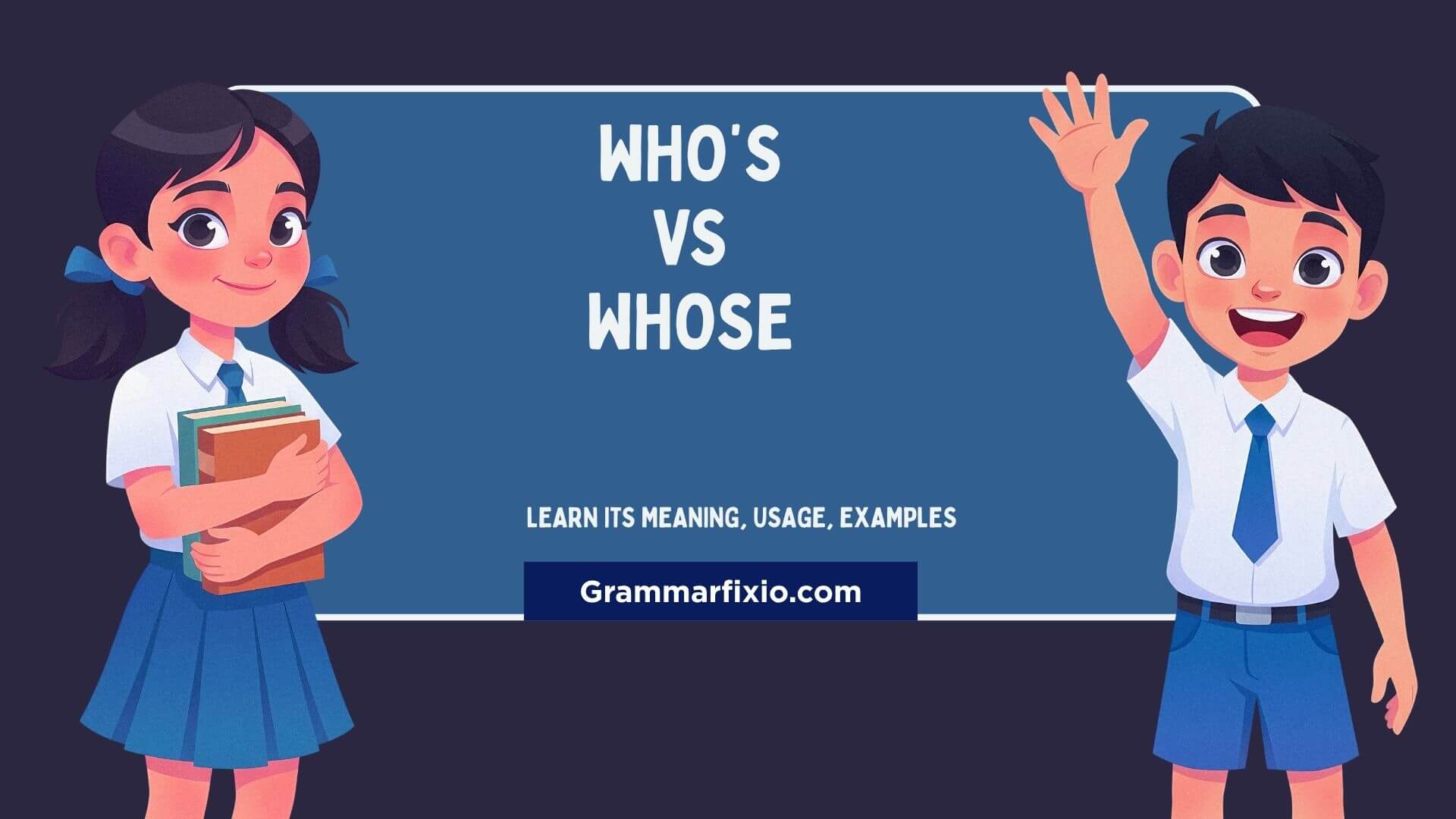
Many English learners confuse who’s vs whose because both words sound exactly the same when spoken. However, they have completely different meanings and grammar rules. Understanding the difference between who’s and whose is important for improving writing, grammar accuracy, and professional communication.
These two words are commonly used in emails, academic writing, social media posts, business communication, and everyday English conversations. Even native speakers sometimes mix them up because they are homophones — words that sound alike but have different meanings and spellings.
People often search for questions like:
- What is the difference between who’s and whose?
- When should I use who’s?
- Is whose possessive?
- How do you remember whose vs who’s?
This complete guide explains the difference between who’s vs whose in a simple and user-friendly way. You will learn meanings, grammar rules, sentence structures, examples, memory tricks, and common mistakes to avoid.
By the end of this article, you will confidently know when to use who’s and when to use whose in both spoken and written English.
Who’s vs Whose: Quick Answer
Simple Difference
| Word | Meaning | Grammar Type |
| Who’s | Short form of “who is” or “who has” | Contraction |
| Whose | Shows possession or ownership | Possessive pronoun |
What Does “Who’s” Mean?
The word who’s is a contraction.
Simple Definition
Who’s = Who is or Who has
The apostrophe replaces missing letters.
Examples of “Who’s”
- “Who’s coming to the meeting?”
- “Who’s ready for dinner?”
- “Who’s finished the project?”
You can replace who’s with who is or who has in the sentence.
Example Check
“Who’s calling?”
Becomes:
“Who is calling?”
The sentence still makes sense, so who’s is correct.
What Does “Whose” Mean?
The word whose shows possession or ownership.
Simple Definition
Whose means “belonging to whom.”
It is used to ask who owns or is connected to something.
Examples of “Whose”
- “Whose bag is this?”
- “Whose phone keeps ringing?”
- “Do you know whose car is outside?”
In these examples, whose asks about ownership.
Also see this: What Is the Difference Between Switch and Swap?
Main Difference Between Who’s vs Whose
The main difference is simple:
| Word | Function |
| Who’s | Means “who is” or “who has” |
| Whose | Shows ownership |
Easy Trick to Remember Who’s vs Whose
Use This Simple Grammar Test
Replace who’s with:
- who is
- who has
If the sentence still works, use who’s.
Example
“Who’s going to the party?”
Becomes:
“Who is going to the party?”
Correct.
For “Whose”
Use it when talking about possession or ownership.
Example
“Whose laptop is on the table?”
The sentence asks who owns the laptop.
How to Use Who’s Correctly
Common Sentence Examples
- “Who’s your teacher?”
- “Who’s been using my computer?”
- “Who’s interested in the project?”
- “Who’s available tomorrow?”
How to Use Whose Correctly
Common Sentence Examples
- “Whose shoes are these?”
- “Whose idea was this?”
- “Whose notebook did you borrow?”
- “Whose turn is it?”
Who’s vs Whose in Questions
Both words often appear in questions.
| Correct Usage | Purpose |
| “Who’s calling?” | Asking who is calling |
| “Whose phone is ringing?” | Asking who owns the phone |
Common Mistakes to Avoid
Mistake 1: Using “Who’s” for Ownership
Incorrect:
“Who’s jacket is this?”
Correct:
“Whose jacket is this?”
Mistake 2: Using “Whose” Instead of “Who Is”
Incorrect:
“Whose coming with us?”
Correct:
“Who’s coming with us?”
Mistake 3: Forgetting the Apostrophe
The apostrophe in who’s matters because it shows contraction.
Who’s vs Whose in Professional Writing
Using these words correctly improves:
- Grammar accuracy
- Professional communication
- Academic writing
- Email writing
- Business English
Small grammar mistakes can affect writing quality and credibility.
Examples of Who’s vs Whose in Real-Life Situations
Workplace Example
- “Who’s leading the meeting today?”
- “Whose presentation is scheduled first?”
Classroom Example
- “Who’s absent today?”
- “Whose textbook is missing?”
Social Media Example
- “Who’s excited for the weekend?”
- “Whose photo got the most likes?”
Why People Confuse Who’s and Whose
People confuse them because:
- They sound identical
- Both relate to “who”
- Apostrophes can be confusing
- English homophones are tricky
However, remembering the grammar rule makes the difference easy.
Best Tips for Remembering the Difference
Quick Memory Tips
- Who’s = Who is / Who has
- Whose = Ownership
Simple Reminder
If you can replace the word with “who is,” use who’s.
If you are asking about ownership, use whose.
Also see this: Smooth vs Smoothe
Frequently Asked Questions About Who’s vs Whose
What is the difference between who’s and whose?
Who’s means “who is” or “who has,” while whose shows possession or ownership.
Is who’s a contraction?
Yes. “Who’s” is a contraction of “who is” or “who has.”
Is whose possessive?
Yes. “Whose” is a possessive pronoun used to show ownership.
How do I know when to use who’s?
Replace the word with “who is” or “who has.” If the sentence still makes sense, use “who’s.”
How do I know when to use whose?
Use “whose” when asking about ownership or possession.
Which is correct: who’s bag or whose bag?
The correct phrase is:
“Whose bag?”
Because it asks who owns the bag.
Why do who’s and whose sound the same?
They are homophones, which means they sound alike but have different meanings and spellings.
Conclusion
Understanding the difference between who’s vs whose is essential for correct English grammar and professional writing. Although the words sound identical, their meanings and uses are completely different.
Use who’s when you mean:
- who is
- who has
Use whose when showing ownership or possession.
In this guide, you learned:
- The meanings of who’s and whose
- Grammar rules and sentence structures
- Real-life examples
- Common mistakes to avoid
- Easy memory tricks
Mastering small grammar differences like who’s vs whose improves communication, writing confidence, and overall English fluency.