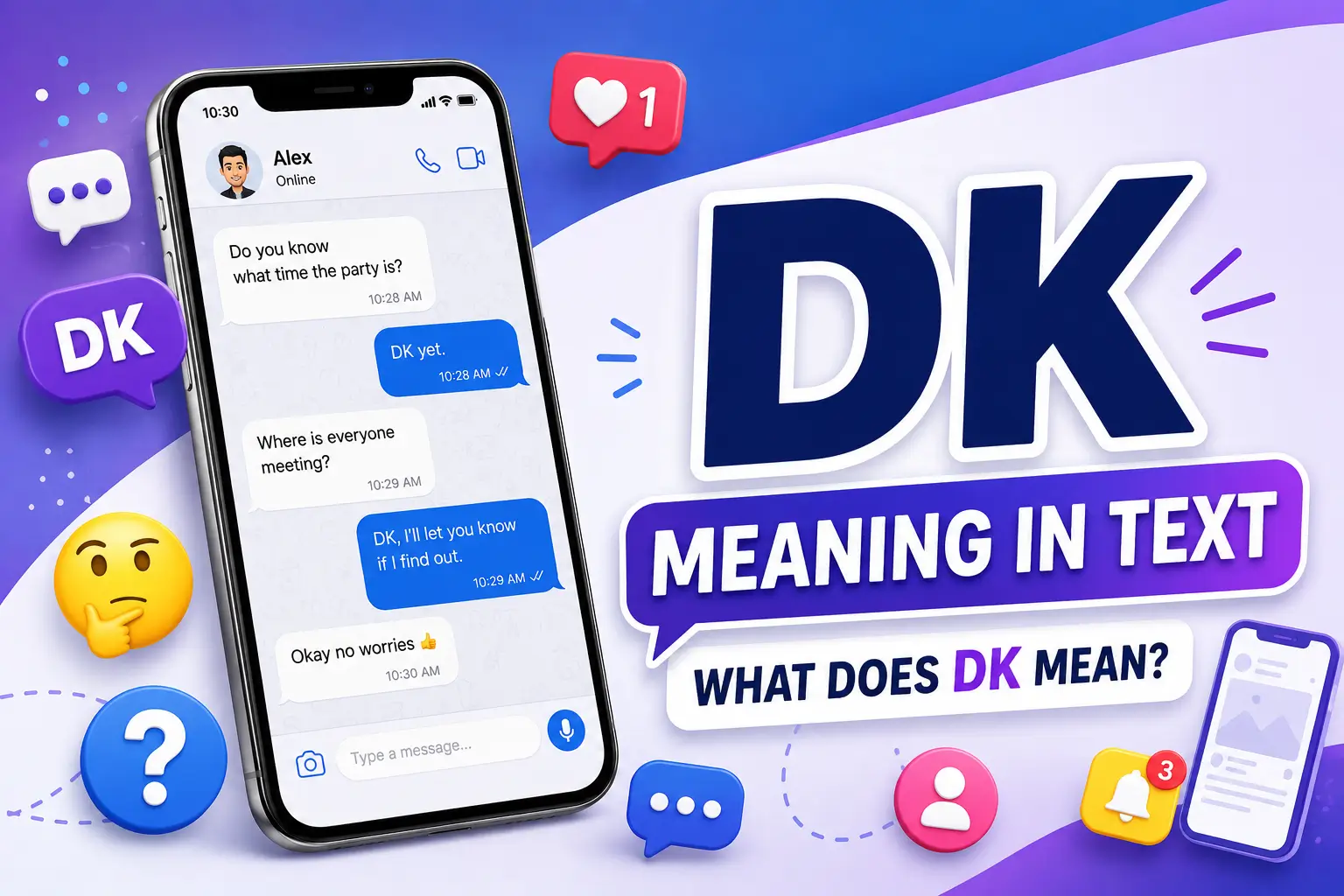
DK meaning in text usually stands for “don’t know”. If you saw DK in a text message, chat, or social media slang post, the person most likely means they are unsure about something or do not have the answer.
However, the exact meaning can change based on the context, tone, and type of online conversation. You may see this abbreviation on Snapchat, Instagram, TikTok, DMs, or in a group chat where people use short forms to reply quickly.
In this guide, you will learn how DK is used in everyday conversations, what different replies mean, and how to understand it when you see it in different situations.
Quick Answer: What Does DK Mean in Text?
DK meaning in text usually stands for “don’t know.” People use it in chats, social media messages, and casual conversations when they do not have an answer or are unsure about something. However, DK can have other meanings in different situations, so context matters.
Quick Facts About DK
| Detail | Information |
| Abbreviation | DK |
| Common Meaning | Don’t know |
| Used In | Text messages, Snapchat, Instagram, TikTok, group chats |
| Tone | Casual, quick, informal |
| Best For | Friends, online chats, everyday conversations |
| Example | “DK what time the movie starts.” |
| Can It Have Other Meanings? | Yes, depending on the situation |
What Does DK Mean in Text?
In texting, DK usually means “don’t know.” It is a short way to say that you are unsure about something or do not have information.
People often use DK because texting is fast. Instead of typing “I don’t know,” they simply write “DK.”
For example:
“DK where she went.”
This means:
“I don’t know where she went.”
The tone of DK is usually neutral. It does not always mean someone is being rude or ignoring you. In most cases, it is just a quick answer.
However, the meaning can change depending on the conversation. If someone replies only “DK” repeatedly, they may sound uninterested or unwilling to explain more.
How People Use DK in Conversations
DK appears in many types of online conversations. Here are common situations where you may see it:
Text Messages
Friends often use DK when they do not have an answer.
Example:
Person A: “Do you know when Sara is coming?”
Person B: “DK.”
Here, DK means “I don’t know.”
Snapchat
On Snapchat, people use DK in quick snaps and chats because messages are often short and casual.
Example:
“DK lol”
This means the person does not know but is keeping the conversation relaxed.
On Instagram, DK may appear in direct messages or comments.
Example:
“DK why everyone likes this trend.”
The person means they do not know the reason.
TikTok Comments
TikTok users may use DK when reacting to videos.
Example:
“DK how this went viral.”
This means they are confused about why something became popular.
Group Chats
In group chats, DK helps people respond quickly.
Example:
“DK who added him.”
The person is saying they do not know who added him.
Dating Chats
People may use DK during casual conversations on dating apps.
Example:
“DK, maybe we can decide later.”
Here, it shows uncertainty.
See this also: BFFR Meaning in Text: What Does BFFR Mean?
Examples of DK in Text Messages
Example 1:
Person A: “Where is Mike?”
Person B: “DK.”
Meaning: The person does not know where Mike is.
Example 2:
Person A: “What should we eat tonight?”
Person B: “DK, anything works.”
Meaning: The person has no preference.
Example 3:
Person A: “Why did she leave early?”
Person B: “DK honestly.”
Meaning: The person does not know the reason.
Example 4:
Person A: “Do you think the store is open?”
Person B: “DK, check online.”
Meaning: The person is unsure.
Example 5:
Person A: “Who won the game?”
Person B: “DK yet.”
Meaning: The person does not know at that moment.
Example 6:
Person A: “Are they coming tomorrow?”
Person B: “DK.”
Meaning: The person has no information.
Example 7:
Person A: “Why is everyone talking about this?”
Person B: “DK haha.”
Meaning: The person is unsure and joking casually.
Example 8:
Person A: “What movie should we watch?”
Person B: “DK, you choose.”
Meaning: The person wants the other person to decide.
How to Reply to DK
Your reply depends on the situation.
Friendly Reply
“Okay, no worries. I’ll find out.”
Casual Reply
“Same, I have no idea.”
Flirty Reply
“Guess we’ll have to figure it out together.”
Confused Reply
“What do you mean you don’t know?”
Polite Reply
“That’s okay. Let me know if you find out.”
Funny Reply
“DK is your favorite answer, isn’t it? 😂”
Other Possible Meanings of DK
Although DK usually means “don’t know” in texting, it can have other meanings.
| Meaning | Where It Is Used | Example |
| Don’t Know | Texting and social media | “DK what happened.” |
| Donkey Kong | Gaming | “I played DK yesterday.” |
| Denmark country code | Geography and online references | “DK websites” |
| Different organization or brand names | Business or communities | Depends on the context |
Always look at the full conversation before deciding what DK means.
DK Meaning on Snapchat, Instagram, and TikTok
The DK meaning on Snapchat, Instagram, and TikTok is usually the same as in regular texting: “don’t know.”
Still, social media conversations are often shorter and more informal. Because of this, people may use DK without extra words.
For example:
“DK 😂”
could simply mean:
“I don’t know, haha.”
The meaning depends on the person, the topic, and the tone of the conversation.
Emotional or Practical Meaning of DK
DK is often a practical response. It shows uncertainty or a lack of information.
Sometimes, it can also show a casual attitude. For example, someone saying “DK” may not want to spend time explaining.
That said, you should not assume someone is being rude just because they use DK. Many people use abbreviations simply because they are typing quickly.
Is DK Formal or Informal?
DK is informal slang.
You can use it in:
- Texts with friends: Yes
- Social media comments: Yes
- Dating apps: Yes
- Work emails: No
- School assignments: No
- Professional messages: Usually no
In formal situations, write “I don’t know” instead.
Common Mistakes People Make With DK
Some common mistakes include:
- Assuming DK always means “don’t know”
- Using DK in professional writing
- Thinking DK is automatically rude
- Ignoring the conversation context
- Confusing DK with other abbreviations
Before replying, check the full message. The surrounding words usually make the meaning clear.
Similar Text Abbreviations and Slang
| Slang Term | Meaning | How It Is Different From DK |
| IDK | I don’t know | More common than DK |
| IDC | I don’t care | Shows a lack of interest |
| IMO | In my opinion | Shares a personal view |
| TBH | To be honest | Shows honesty or personal thoughts |
| FYI | For your information | Gives information |
| LOL | Laugh out loud | Shows laughter |
Easy Way to Remember DK
A simple way to remember DK is:
D = Don’t
K = Know
So when you see DK, think “Don’t Know.”
FAQs About DK Meaning in Text
Q1: What does DK mean in texting?
DK usually means “don’t know” in texting. People use it when they do not have an answer or are unsure about something.
Q2: What does DK mean on Snapchat?
On Snapchat, DK usually means “don’t know.” It is commonly used in quick chats and short replies.
Q3: Is DK rude?
DK is not usually rude. However, a short reply like “DK” can sound unfriendly depending on the conversation.
Q4: How do I reply to DK?
You can reply based on the situation. Try asking another question, sharing information, or simply saying “okay.”
Q5: Can DK have more than one meaning?
Yes. While “don’t know” is the most common texting meaning, DK can mean other things in different areas.
Q6: What does DK mean on Instagram?
On Instagram, DK usually means “don’t know” in direct messages, comments, and casual conversations.
Q7: What does DK stand for?
In most text conversations, DK stands for “don’t know.” The exact meaning depends on the context.
Conclusion
DK meaning in text usually refers to “don’t know.” It is a common abbreviation used in chats, social media, and casual online conversations.
The meaning is simple, but context still matters. A message, comment, or reply can change depending on the topic and tone.
When you see DK, check the conversation around it. Most of the time, it simply means the person does not know the answer.










1 thought on “DK Meaning in Text: What Does DK Mean in Texting and Social Media?”