WYS Meaning in Text: What Does WYS Mean in Chat?
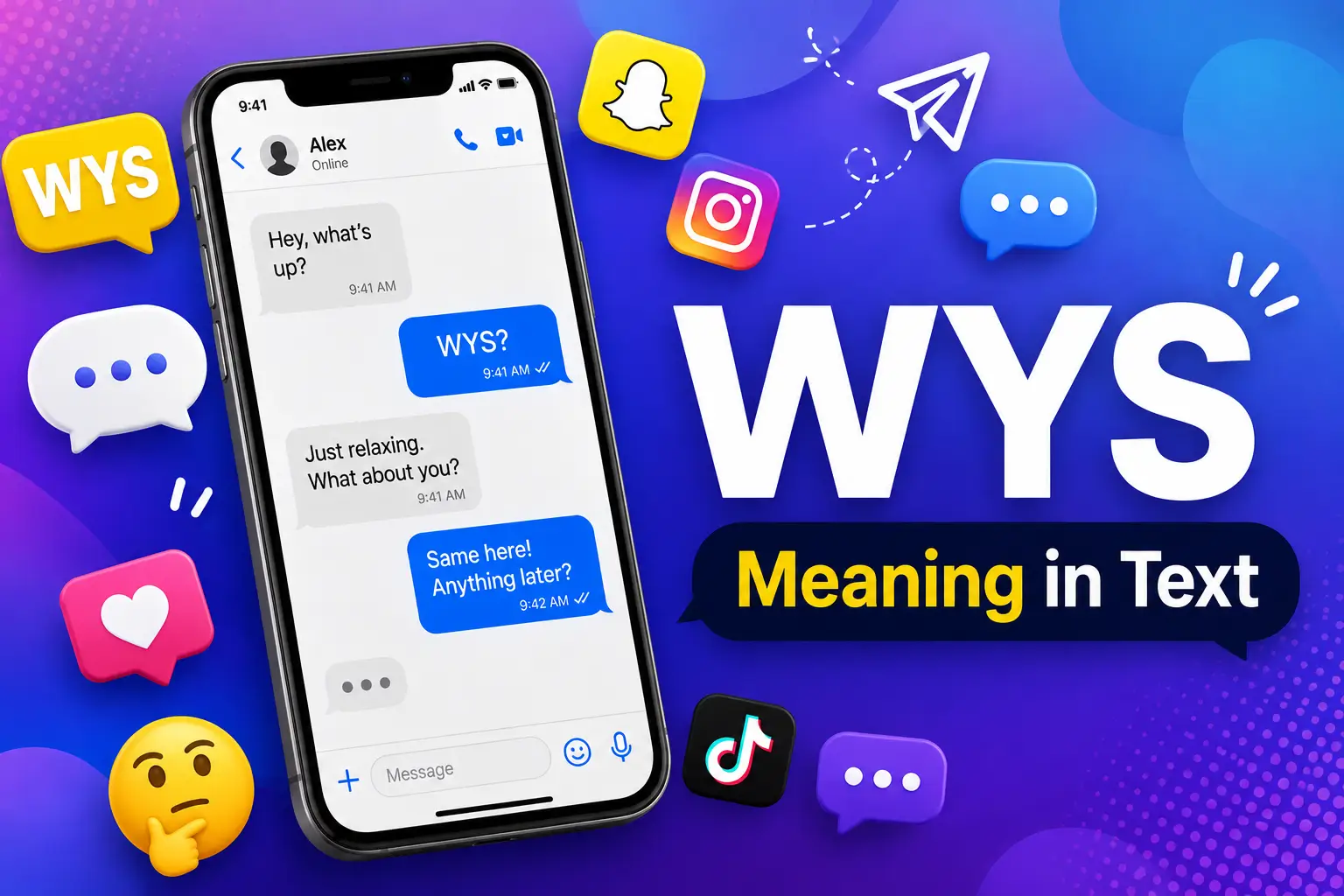
WYS meaning in text can be confusing when you see it in a message for the first time. In most ...
Read more
GTG Meaning in Text: What Does GTG Mean in Chat?
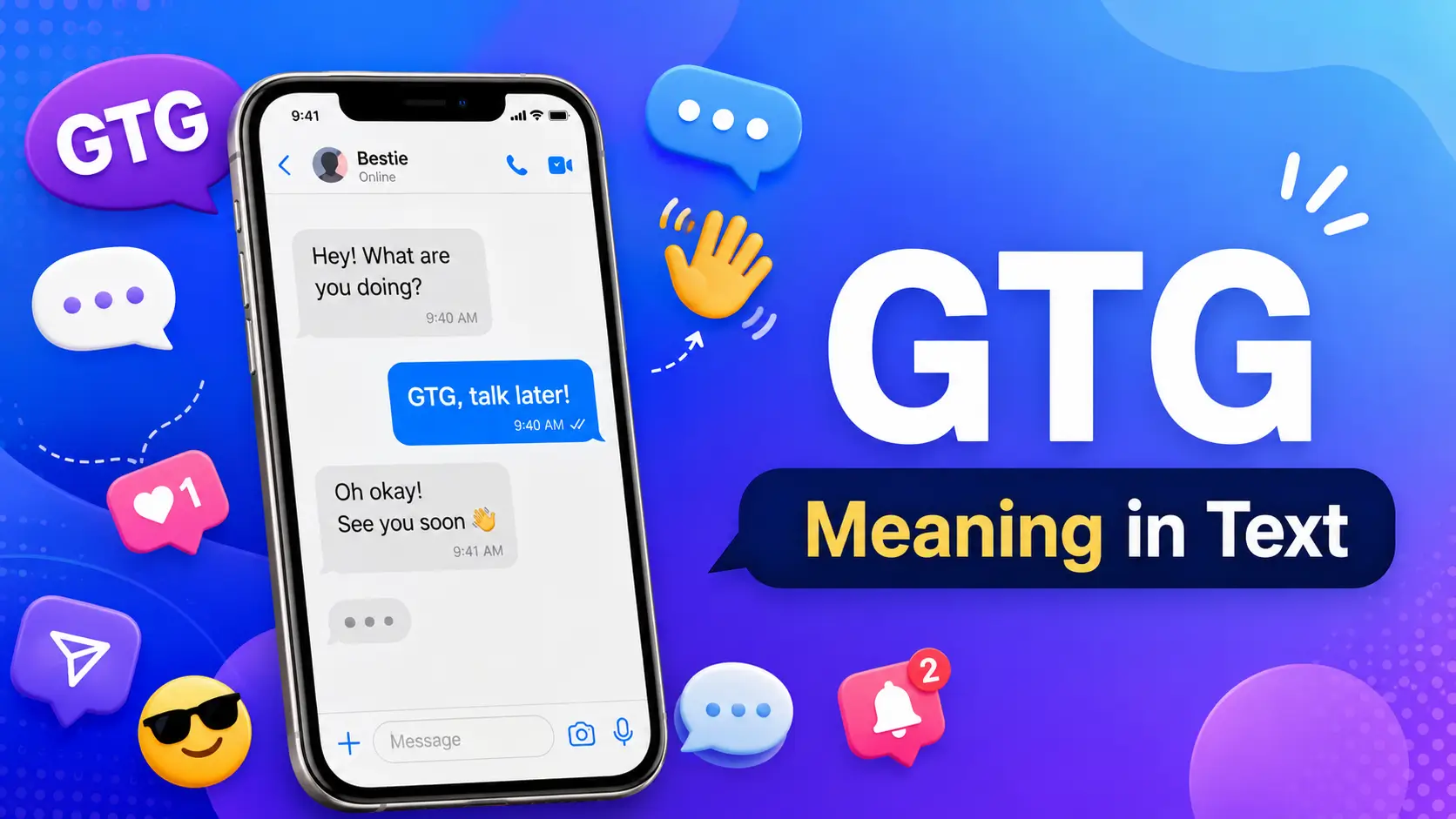
GTG meaning in text can be confusing when you first see it in a message. In most texting slang and ...
Read more
ONB Meaning in Text: What It Means and How to Reply

ONB MEANING IN TEXT is usually “on bro.” In texting slang, people use ONB like “I swear,” “for real,” or ...
Read more
NM Meaning in Text: What Does NM Mean?

NM Meaning in Text usually means “Not Much.” It’s a common texting slang reply people use when someone asks, “What’s ...
Read more
HB Meaning in Text: What It Means and How to Reply

HB MEANING IN TEXT usually stands for “Happy Birthday,” making it a quick and friendly way to send birthday wishes ...
Read more
Led vs Lead: Meaning, Grammar, and Correct Usage

Led vs. lead becomes easy to understand when you focus on time. Use lead for an action happening now or ...
Read more
Inter vs. Intra: Meaning, Differences, and Correct Usage

Inter vs. intra becomes simple when you focus on boundaries. Inter- means between or among separate people, groups, places, or ...
Read more
Concave vs Convex: Meaning, Key Differences, and Uses

Concave vs convex becomes easy to understand when you look at the direction of a curve. Concave means curved inward, ...
Read more
Smoothe vs Smooth: Which Spelling Is Correct?
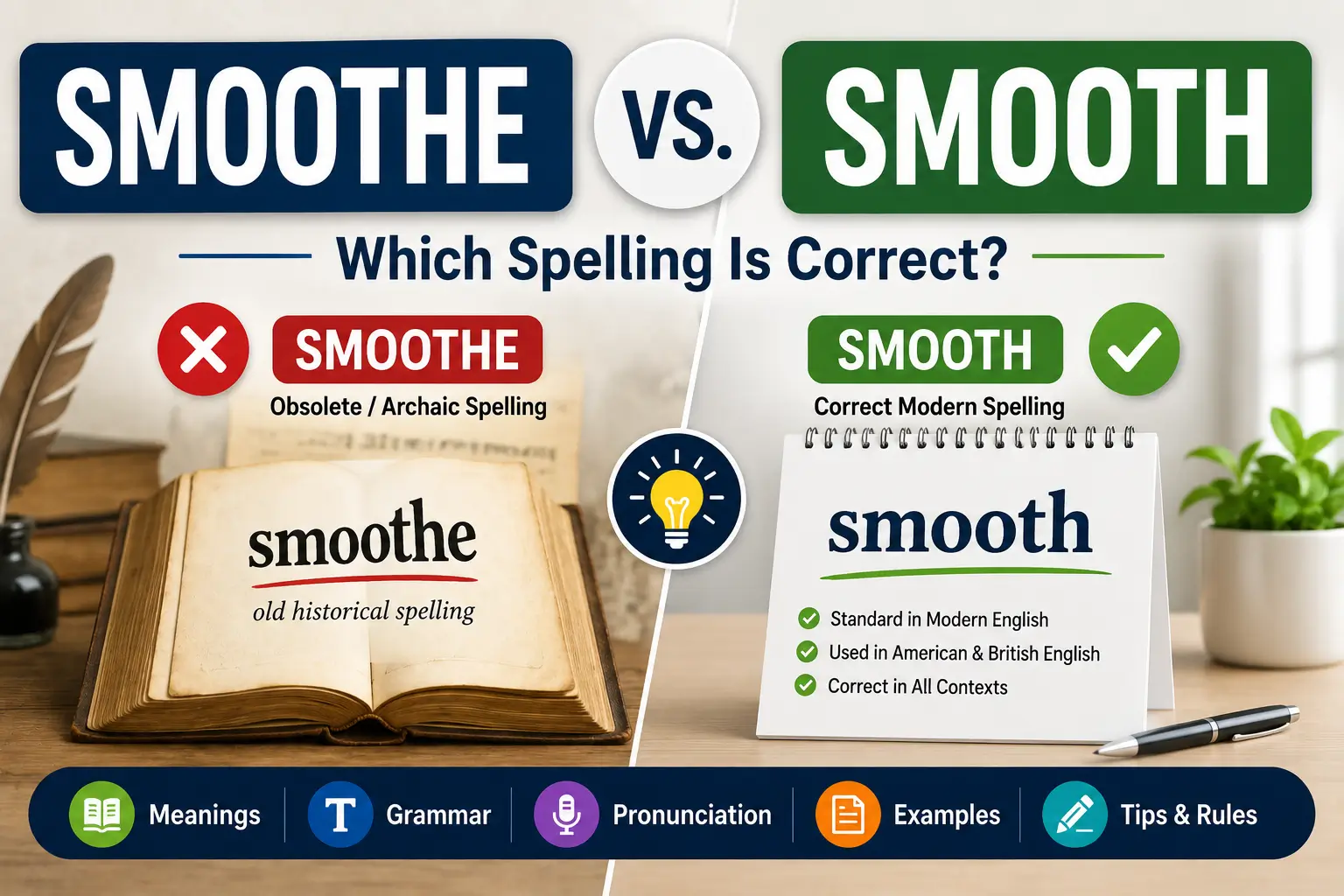
Smoothe vs smooth is a spelling question with a simple answer: use smooth in modern English. Smooth is the accepted ...
Read more
Whichever vs Whatever: Meaning, Difference, and Usage
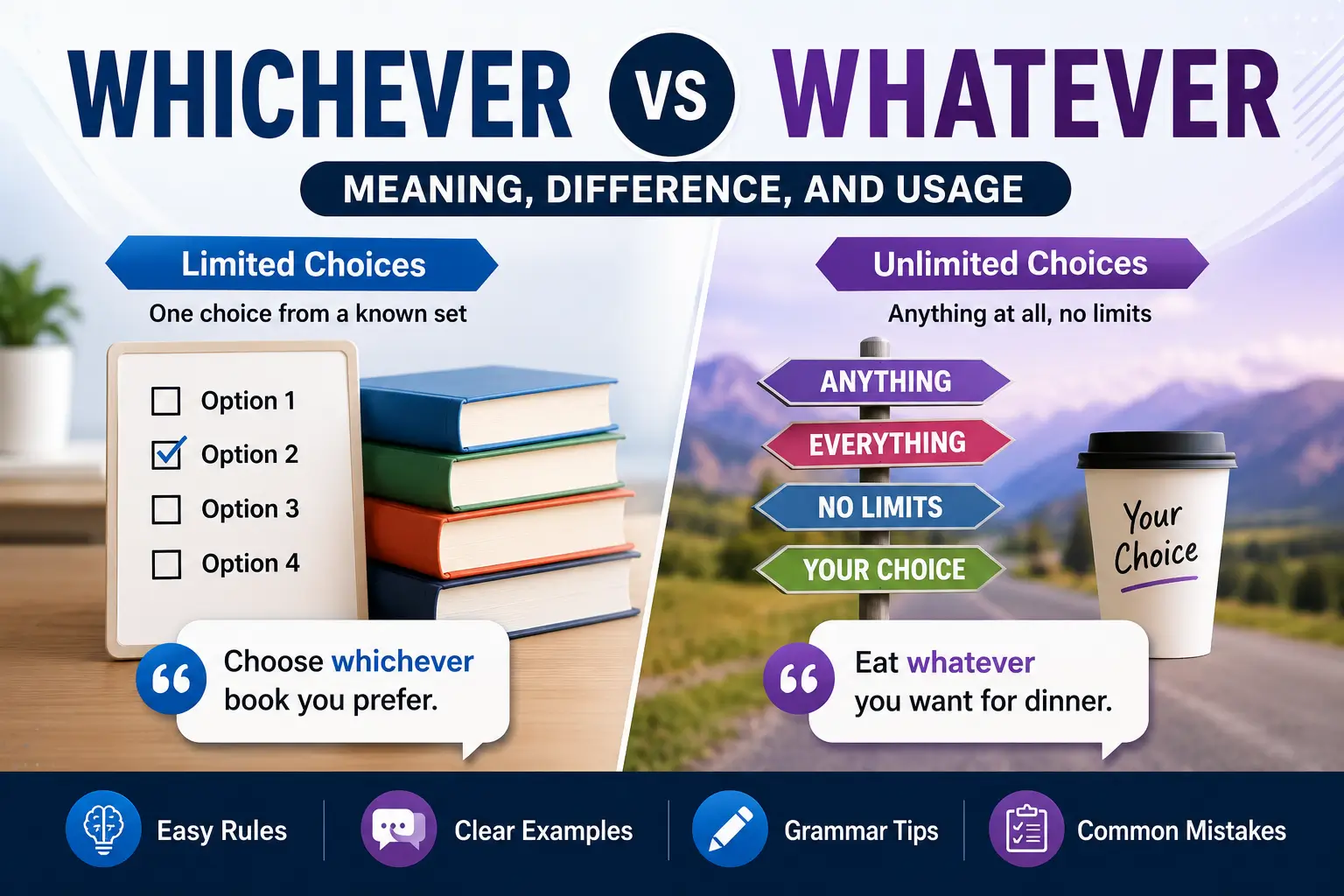
Whichever vs whatever becomes easy to understand when you focus on the available choices. Use whichever when choosing one item ...
Read more