Canon vs Cannon: Meaning, Differences, Examples, and Correct Usage
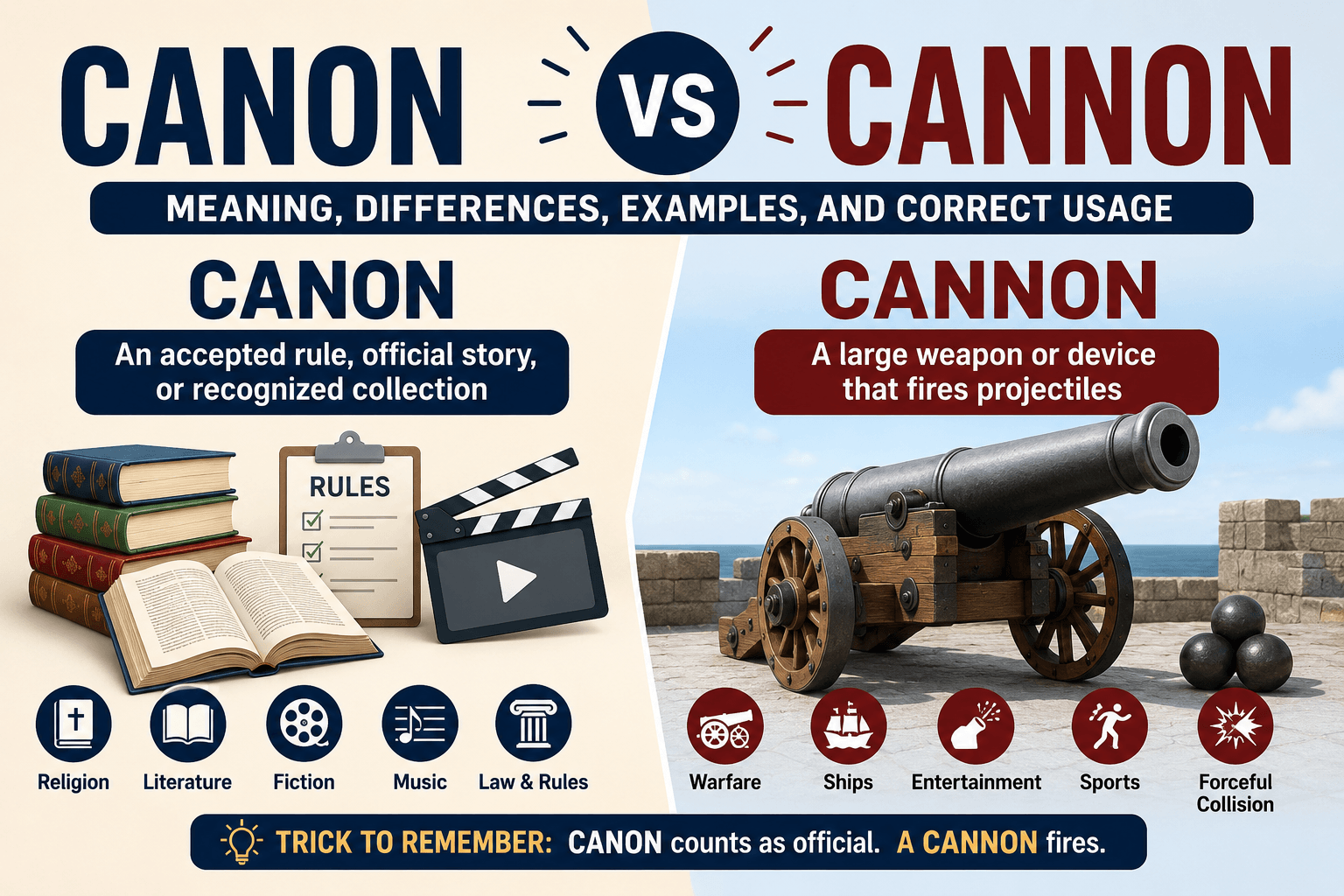
Canon vs Cannon: Meaning, Differences, Examples, and Correct Usage

Why These Two Words Look Alike but Mean Different Things The canon vs cannon difference is simple: canon means an accepted rule or official story, while cannon means a large weapon that fires projectiles. These homophones share one pronunciation, but their spelling differs: single n for accepted material and extra n for artillery. In editing, … Read more

Unkept vs Unkempt: Meaning, Differences, and Examples
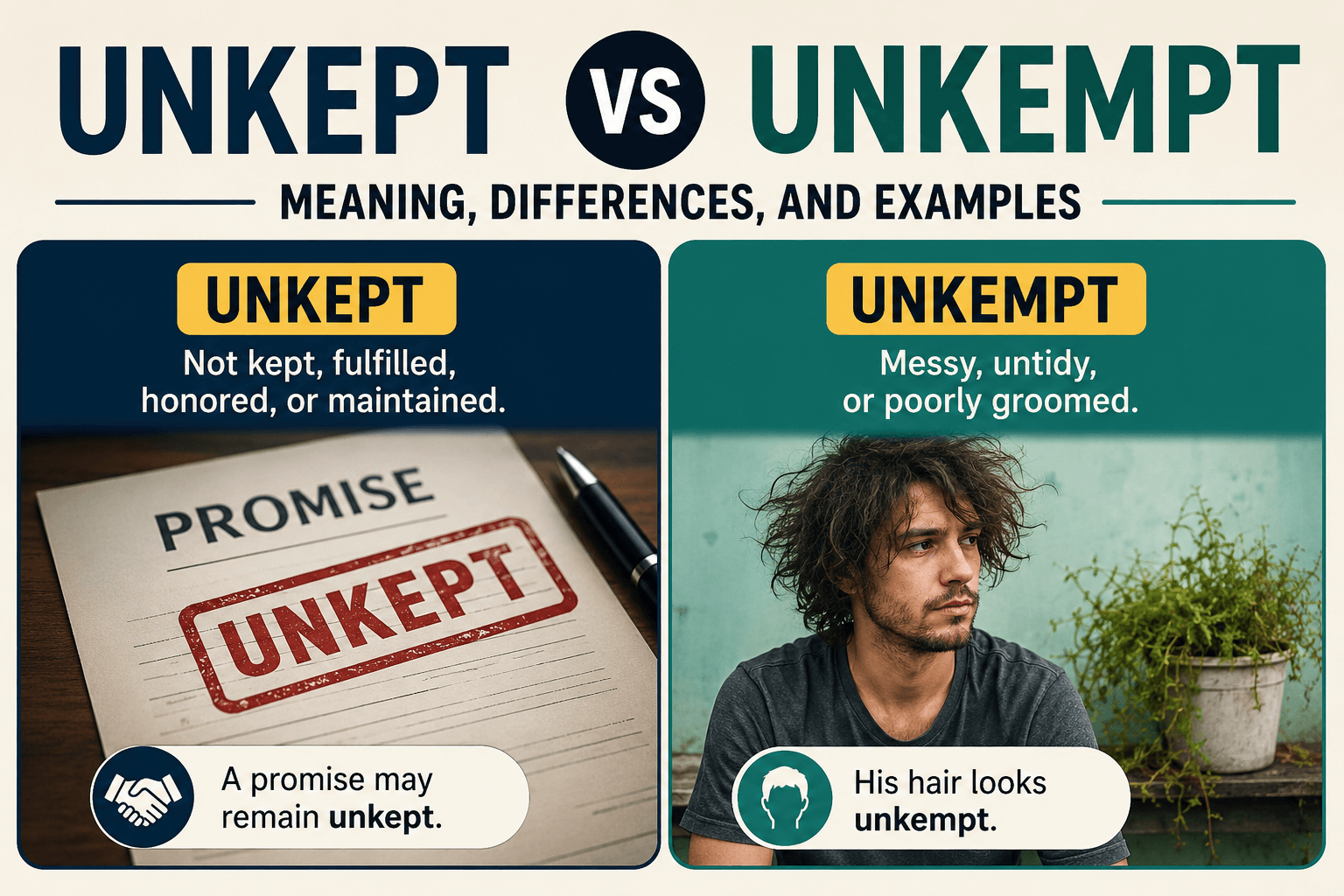
Unkept vs Unkempt: Meaning, Differences, and Examples

Why These Similar Words Have Different Meanings Unkept vs Unkempt compares two valid words: unkept means not kept, while unkempt describes a messy or poorly groomed appearance in standard English. Their similar spelling and close pronunciation cause grammar confusion, but the meaning difference is clear. Use unkept for an unfulfilled promise, an unmaintained property, or … Read more

Cancellation vs Cancelation: Which Spelling Is Correct?
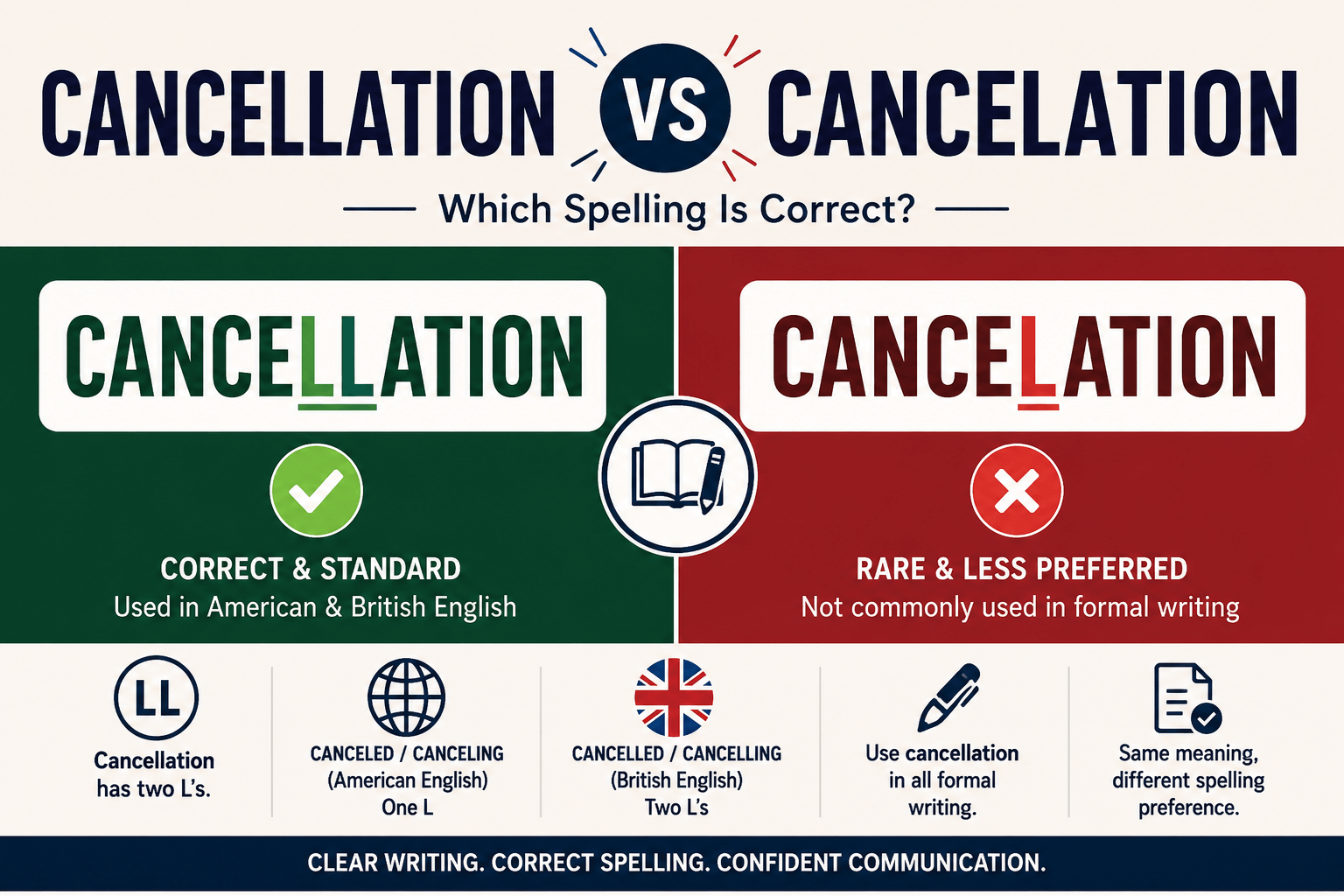
Cancellation vs Cancelation: Which Spelling Is Correct?

The Simple Answer and Correct Usage Cancellation vs Cancelation is easier to understand when you know that cancellation is the standard noun in American and British English today. It means the act of stopping or ending a planned event, appointment, service, or agreement. Cancelation appears as a rare variant, but cancellation is the preferred form … Read more

Fliers vs Flyers: Which Spelling Is Correct and When Should You Use Each?

Fliers vs Flyers: Which Spelling Is Correct and When Should You Use Each?

Fliers vs Flyers becomes easier when you match the spelling to the meaning, the sentence, and the style guide your reader expects in clear writing. Both forms are valid English words, and each works as a noun. They share the same pronunciation, but context gives each form its clearest use. For advertising, flyer is the … Read more

Realize vs Realise: Meaning, Differences, Grammar Rules, and Examples
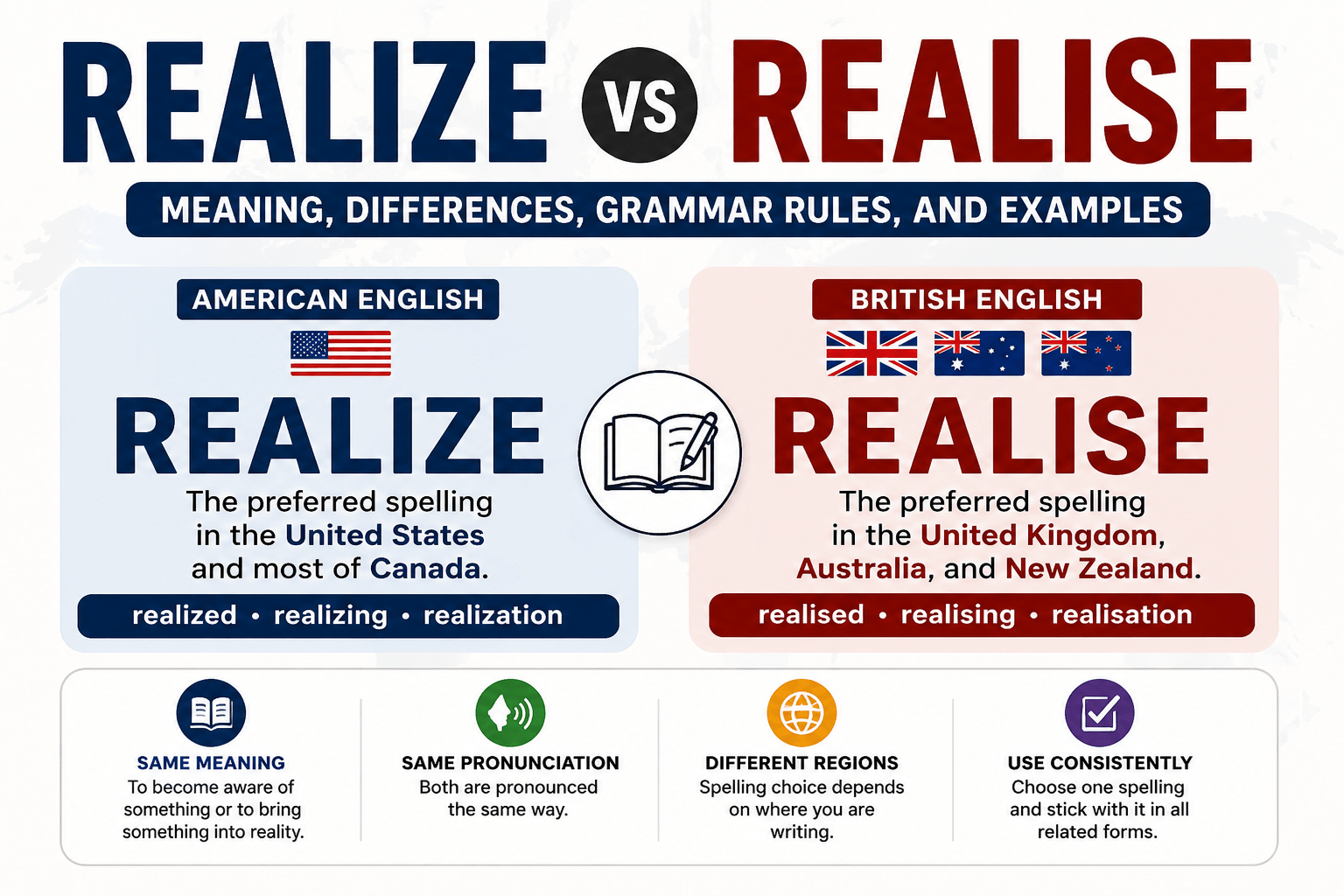
Realize vs Realise: Meaning, Differences, Grammar Rules, and Examples

Realize vs Realise differs by one letter, but both forms have the same meaning, pronunciation, and grammar in standard written English today. Use realize for American English and most Canadian English. Use realise for common British and Australian writing. The -ize form is not simply American. It has a long history in British English, and … Read more

Laid vs Layed: Which Spelling Is Correct in English?
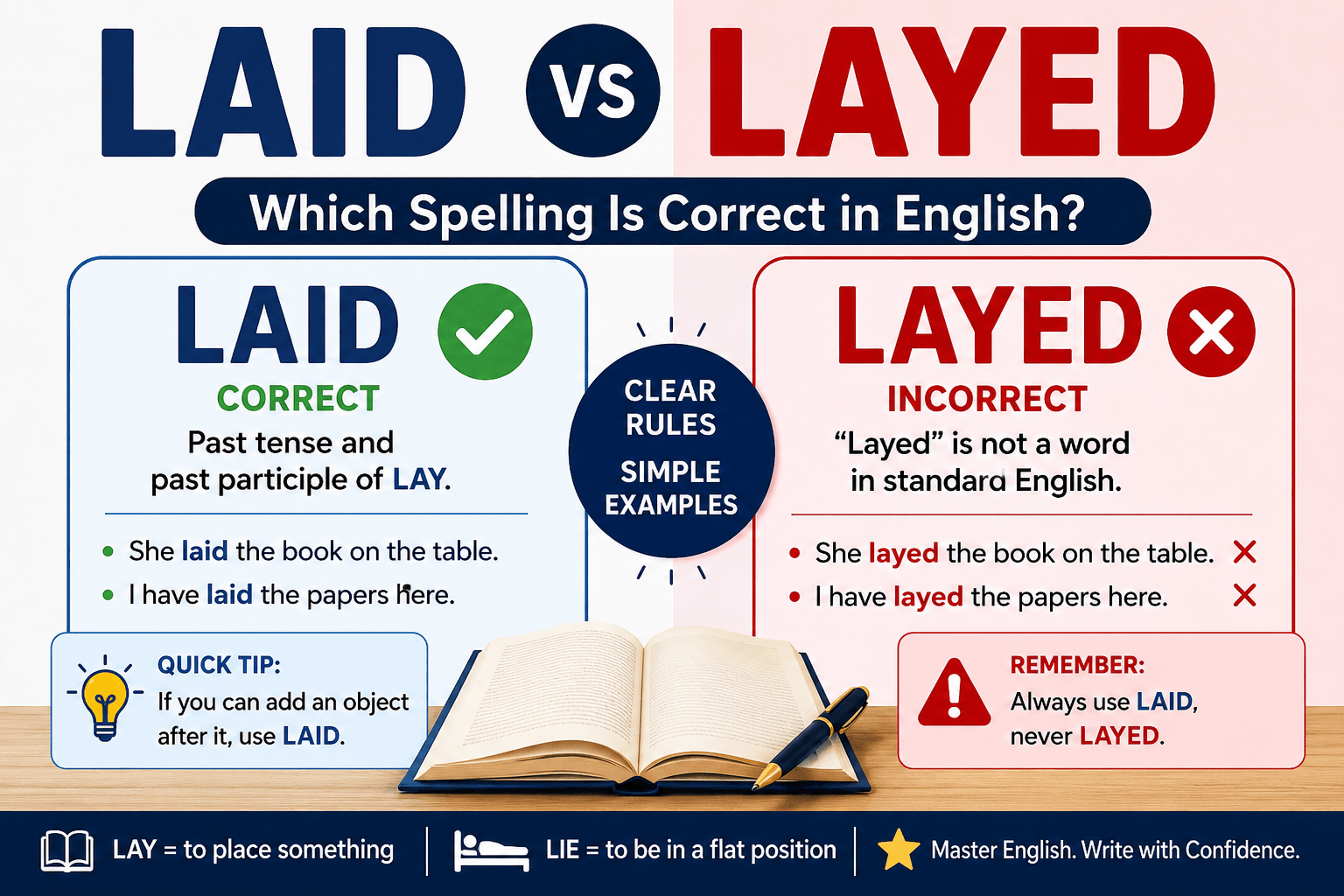
Laid vs Layed spelling and grammar comparison

How Lay and Lie Work in Real English Laid vs Layed becomes clearer when you separate spelling from grammar: laid is correct, while layed is a common error in standard English today. Use laid as the past tense and past participle of lay, which means to place something down. The deeper problem involves lay and … Read more

Loosing vs Losing: Meaning, Differences, Grammar Rules, and Examples
Loosing vs Losing: Meaning, Differences, Grammar Rules, and Examples

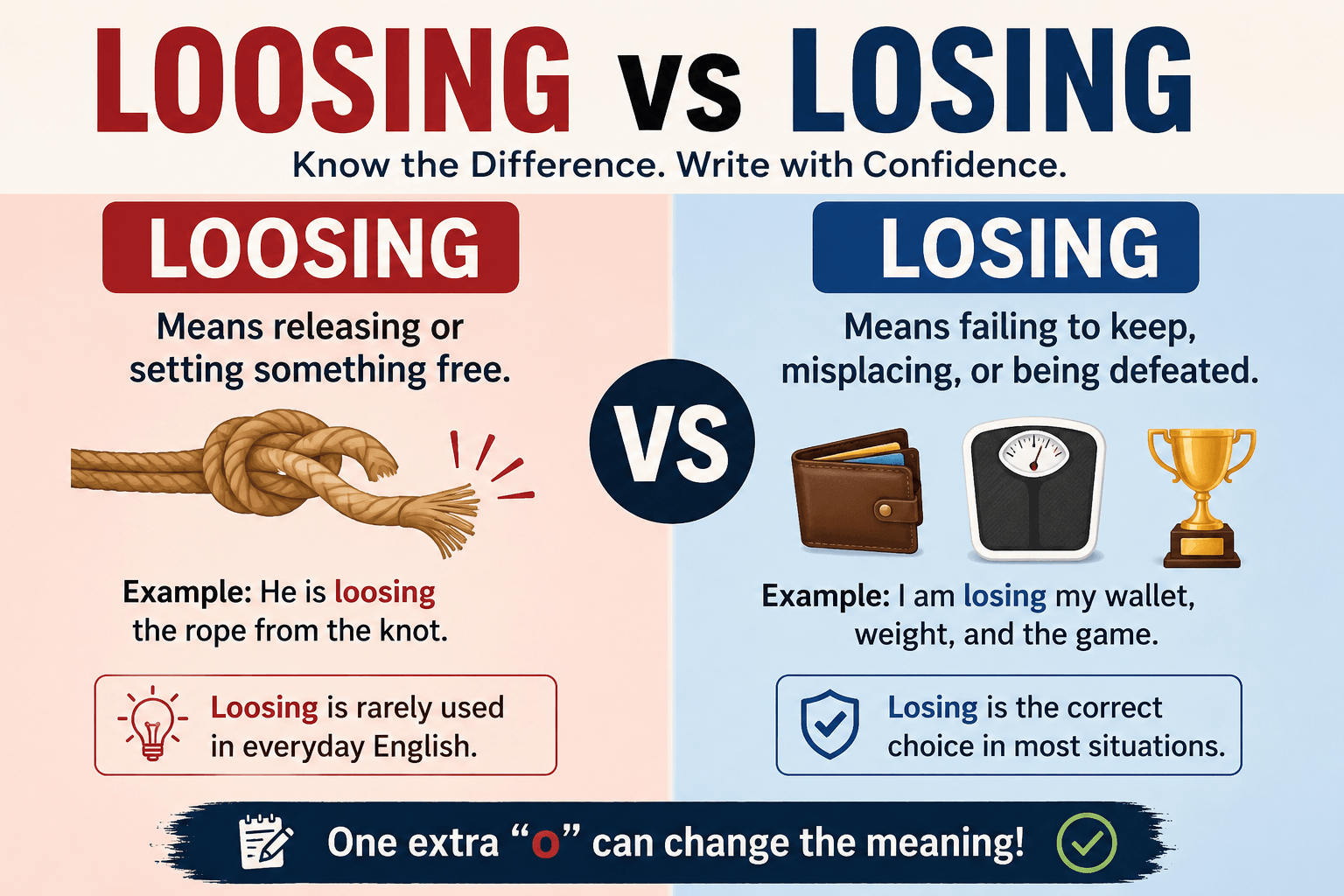
How One Extra Letter Changes the Message Loosing vs Losing becomes simple once you link losing to loss and loosing to release, then check the sentence meaning before you write each time. This difference starts with lose, a verb, and loose, usually an adjective. The past tense is lost, while loss is a noun. In … Read more

Requester vs Requestor: Which Spelling Is Correct and When Should You Use It?
Requester vs Requestor: Which Spelling Is Correct and When Should You Use It?

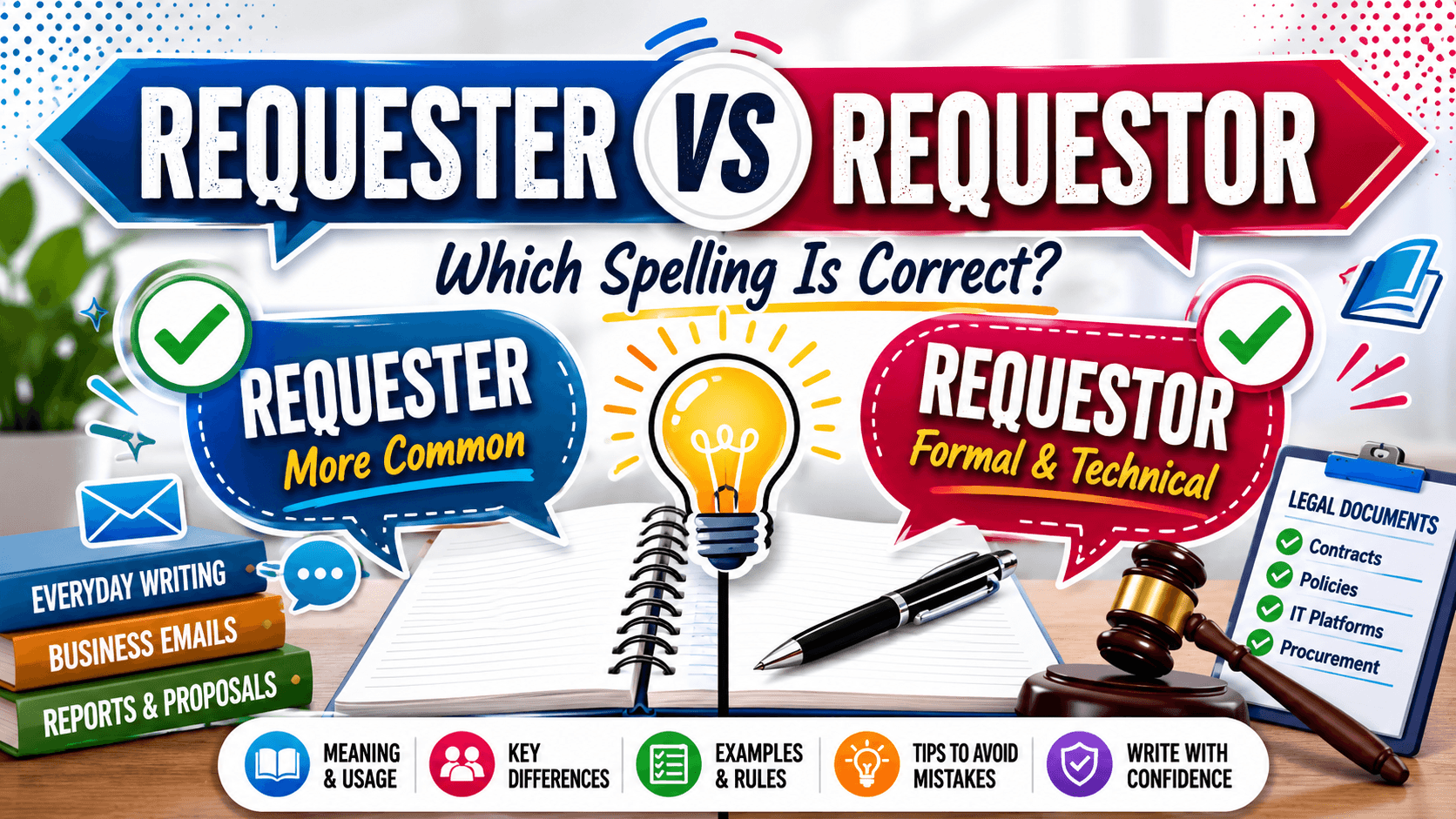
Which Spelling Fits the Situation? Requester vs Requestor asks which spelling fits best. Requester is the usual choice, while requestor remains a valid variant in formal systems. Use requester in everyday business writing, emails, reports, articles, and school work because it sounds natural and clear. Keep requestor when a contract, legal document, procurement workflow, IT … Read more

Steers vs Stear: Which Spelling Is Correct and How Should You Use It?
Steers vs Stear: Which Spelling Is Correct and How Should You Use It?

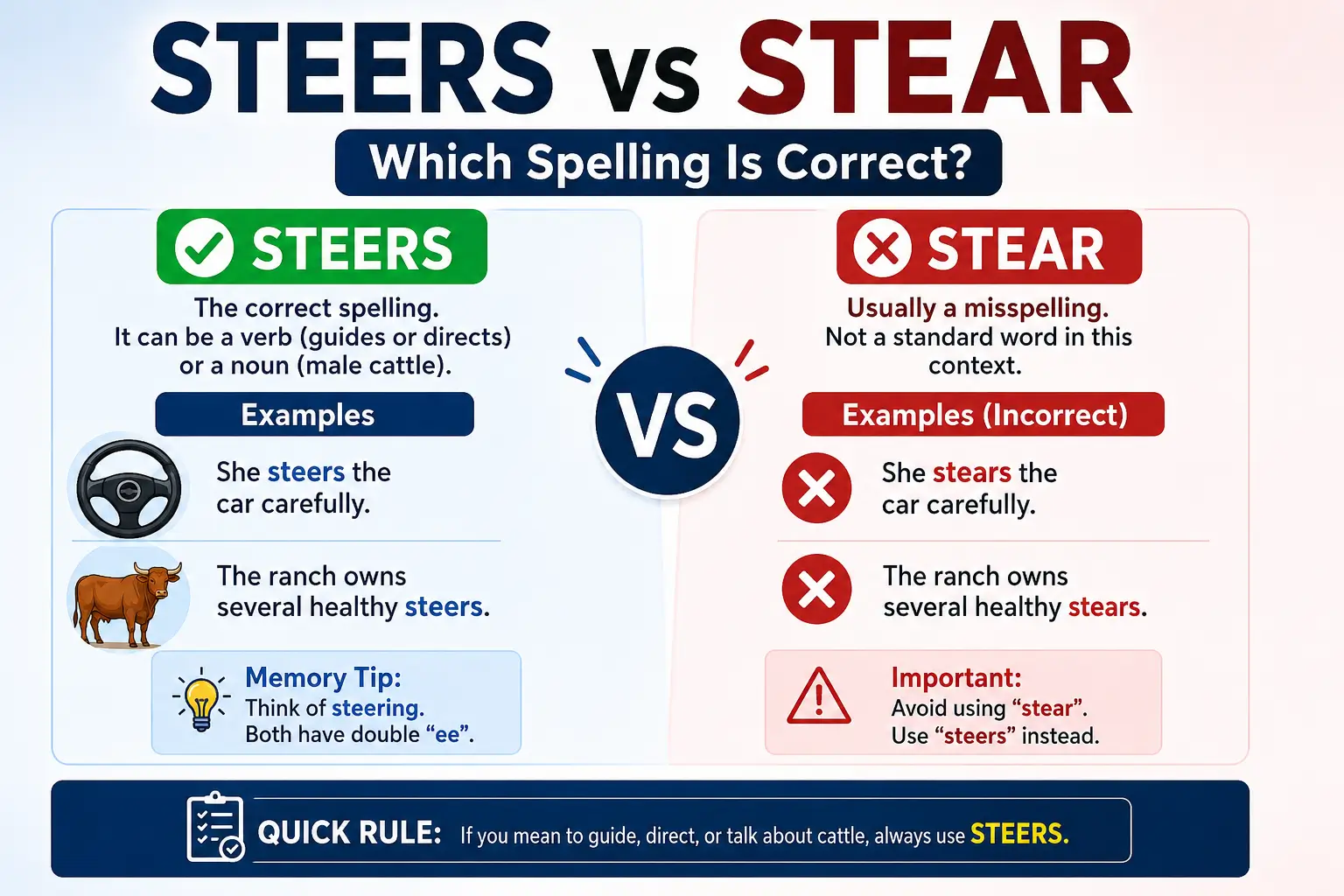
Have you ever paused while writing and wondered whether the correct spelling is steers or stear? You’re not alone. This is a common spelling confusion that affects students, professionals, bloggers, and English learners alike. Since the two words look similar and sound nearly identical, it’s easy to see why many writers accidentally use the wrong … Read more

Can vs May: Meaning, Difference, Examples, and Correct Usage

Can vs May difference meaning and examples

Can vs. May becomes easier once you understand that modern English no longer follows every old grammar rule as strictly as before. In modern English language usage, the difference between can and may feels much smaller because the old sharp dividing line between the use of can and may has slowly eroded through years of … Read more